 bluename
 How to Care for Pinguicula Indoors During Winter: A Grower’s Survival Guide
Winter is coming, and if you’re like me, a passionate carnivorous plant enthusiast, a familiar sense of dread might be creeping in. You look at your vibrant Pinguicula, or butterwort, with its dewy, sticky leaves that have been happily catching gnats all summer, and you wonder: “Will it make it through the cold, dark months indoors?” I’ve been there. I’ve watched leaves turn soft, seen growth stall into an alarming stillness, and yes, I’ve even lost a few precious plants to what I now know were entirely preventable mistakes. The core challenge of how to care for Pinguicula indoors during winter isn’t just about keeping it alive; it’s about understanding its unique seasonal rhythm and providing the precise care it needs to not only survive but thrive and prepare for a spectacular spring comeback.
For years, I treated my temperate and Mexican Pinguicula the same in winter, with disappointing results. It was through trial, error, and extensive consultation with resources from societies like the Carnivorous Plant Society (UK) and the International Carnivorous Plant Society (ICPS) that I pieced together a reliable system. This guide is the culmination of my personal experience, a detailed account of my latest winter care regimen, including the pitfalls I encountered and exactly how I navigated them over a critical two-week adjustment period.
Understanding Your Pinguicula’s Winter Identity
The first and most critical step is identifying what type of butterwort you have. Their winter needs diverge dramatically.
- Temperate Pinguicula (e.g., P. vulgaris, P. grandiflora): These natives of colder climates require a true, dormant hibernaculum. As daylight wanes and temperatures drop, they form a tight, bud-like resting bud called a hibernaculum. They need a cold, near-freezing dormancy period for long-term health.
- Mexican Pinguicula (e.g., P. moranensis, P. agnata, P. gypsicola): Hailing from regions with a dry season, these do not require freezing temperatures. Instead, they undergo a succulent phase, producing smaller, non-carnivorous leaves. They need a cool, bright, and much drier rest.
My collection primarily consists of Mexican varieties like the prolific P. ‘Weser’ and a stunning P. agnata x gypsicola hybrid. This winter’s focus, therefore, is on managing this succulent transition.
My Step-by-Step Winter Care Protocol
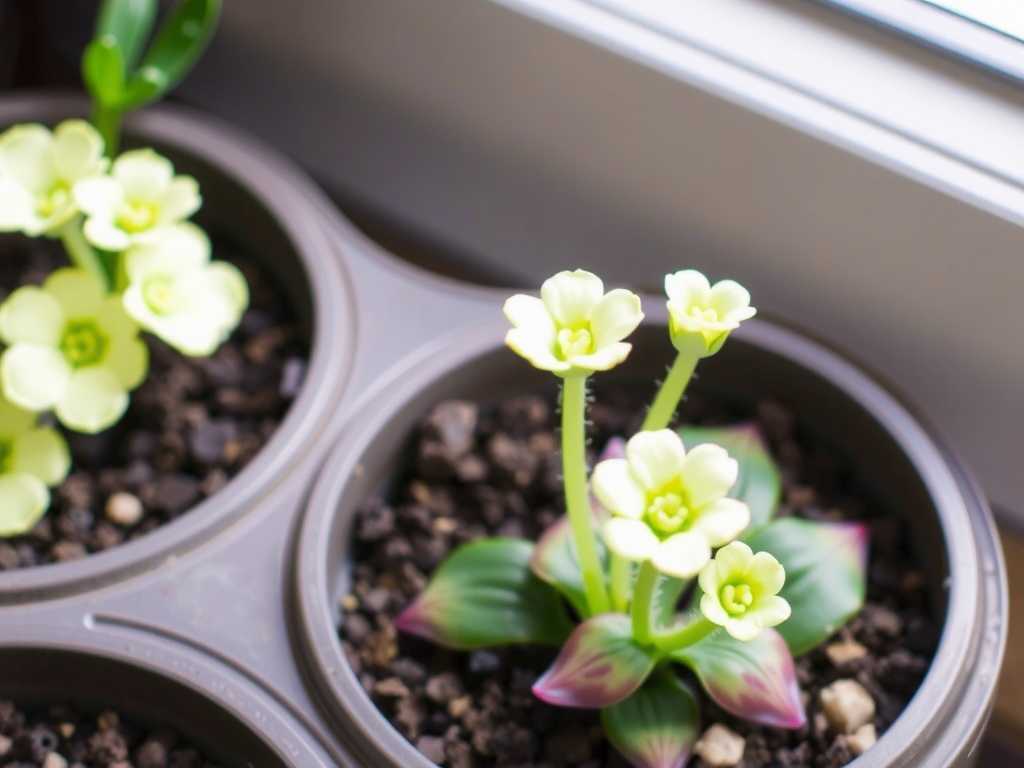
Two months ago, I noticed the first signs: new growth at the center became tighter, and the leaves felt slightly thicker. This was my cue to initiate the winter routine.
Adjusting the Watering Regime: Less is Infinitely More
This is the most common point of failure. During active growth, I keep my butterworts in a shallow tray of distilled or rainwater, maintaining constant moisture. For winter, I completely abandoned the tray method.
- My Action: I moved each pot to a separate, dry saucer. I began watering only from the top, using a small syringe to apply water directly to the base of the plant, avoiding the leaves. I then waited until the soil was completely dry for 2-3 days before even considering watering again. A moisture meter became my best friend, ensuring I wasn’t guessing.
- The Two-Week Observation: The first week was nerve-wracking. The soil dried out faster than I expected, and the outer, carnivorous leaves began to wither and brown. I panicked and almost reverted to the tray. However, upon closer inspection, the tight central rosette remained firm and healthy. By the end of the second week, the plant had clearly reabsorbed nutrients from the old leaves, and I could see tiny, succulent leaves emerging from the center. This was the confirmation I needed—the plant was naturally transitioning, not dying. The pitfall here was misinterpreting natural senescence as dehydration.
Providing the Right Light and Temperature
While growth slows, light remains crucial for maintaining health and preventing etiolation. Temperature is the key trigger for the succulent phase.
- My Setup: I moved my plants from their summer spot under intense artificial grow lights to a south-facing windowsill where they receive about 4-5 hours of direct winter sun, supplemented by 6 hours of gentler LED light in the early evening. More importantly, I ensured the nighttime temperature near the window consistently dropped to between 50-60°F (10-15°C). I used a simple digital thermometer/hygrometer to monitor this.
- The Two-Week Observation: The lower light initially caused a slight paling of the remaining carnivorous leaves. However, the new succulent growth emerged a beautiful, stress-tinted pinkish-green, indicating it was receiving adequate, appropriate light levels. The cooler nights were essential; in a warmer room (above 70°F/21°C), my P. agnata hybrid showed no signs of transitioning, simply producing weak, elongated leaves. Relocating it to the cooler microclimate of the windowsill prompted the desired change within 10 days.
Halting Fertilization and Managing Feeding
A common question is about feeding during winter. The American Horticultural Society’s (AHS) guidelines on plant dormancy stress that fertilizing a resting plant can damage roots and cause chemical burns. This is doubly true for carnivorous plants adapted to nutrient-poor soils.
- My Rule: I stopped all feeding and fertilization the moment I initiated the winter watering shift. The plant’s metabolism is too slow to utilize it, and the risk of root rot and soil algae growth skyrockets.
- Natural Feeding: Any occasional fungus gnat that lands on the remaining sticky leaves is a bonus, but I do not supplement. The plant is designed to live off its stored energy and photosynthesis during this phase.
Troubleshooting Common Winter Problems
Even with the best plan, issues arise. Here’s what I faced and fixed.
- Problem: Persistent Mold on Soil Surface. The combination of organic matter in my peat-perlite mix and reduced evaporation led to white mold.
- Solution: I carefully scraped off the top 1/4 inch of affected soil and replaced it with a sterile layer of pure horticultural pumice. This improved surface drainage and airflow, eliminating the mold without disturbing the roots. Increasing air circulation with a small, low-speed fan for a few hours a day also proved highly effective.
- Problem: The “Soggy Center” Scare. On one plant, the very center of the rosette felt softer than I liked.
- Solution: I immediately withheld all water for over two weeks. I used a paper towel corner to wick any moisture away from the crown. This was a tense period, but the plant stabilized. The cause was a single overzealous watering. It taught me that when in doubt, do not water.
Preparing for the Spring Awakening
The winter care cycle isn’t complete without a plan for revival. In late winter, as daylight noticeably increases, I will gradually reintroduce the tray method, starting by adding a minimal amount of water to the tray and letting the plant absorb it over a day before letting it dry out again. This slow rehydration over a couple of weeks prevents shock. Full watering and a return to stronger grow lights will only commence once I see clear, active carnivorous leaf growth.
How often should I water my Mexican Pinguicula in winter? Water only when the soil is completely dry throughout, then wait an additional 2-3 days. For most of my plants in a cool, bright location, this translates to watering every 10-14 days, sometimes even longer. Always judge by soil dryness, not a calendar.
My Pinguicula’s leaves are all turning brown. Is it dead? Not necessarily. For Mexican types, the outer carnivorous leaves naturally die back as the succulent rosette forms. For temperate types, the entire above-ground plant will die back to the hibernaculum. As long as the center (or the bud) is firm and not mushy, your plant is likely following its natural cycle. Reduce watering and monitor closely.
Can I keep my Pinguicula under grow lights all winter? Yes, absolutely. In fact, it’s recommended for consistent light. However, you must pair it with the crucial cool-down period. You may need to adjust your grow light schedule to provide slightly shorter photoperiods (10-12 hours) and, most importantly, ensure the plants experience a significant temperature drop at night, which might mean moving them to a cooler room or away from heat sources.
Successfully guiding your Pinguicula through winter is a rewarding exercise in observation and restraint. It requires shifting from a summer mindset of abundance to one of minimalist support. By respecting their need for a cooler, drier, and brighter rest, you are not neglecting them but providing the exact conditions they require to complete their life cycle. The payoff is a resilient plant that will reward your patience with vigorous growth and a profusion of beautiful flowers when the seasons turn. Trust the process, learn from the subtle cues your plant gives you, and you’ll transform winter from a season of anxiety into one of quiet confidence.





