 bluename
 Pinguicula Root Rot Recovery Care After Repotting: The 2-Week Rescue Plan I Use on Every Sick Butterwort
Short answer first, because a rotting plant doesn't give you time to read 2,000 words.
Unpot it. Rinse the roots under room-temperature water. Snip off every root that's brown, black, or squishy, plus any mushy leaf base. Dust the cuts with sulfur powder. Repot into a gritty mineral mix — no peat, no sphagnum moss. Water from the bottom with distilled or rainwater. Then leave it alone in bright indirect light for two weeks.
That's the whole Pinguicula root rot recovery care after repotting process. Six moves.
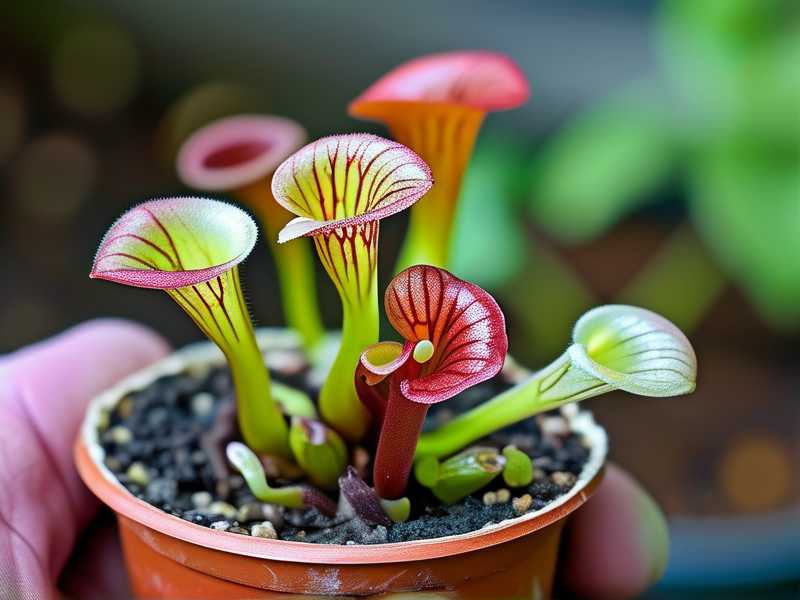
I've done this rescue on four butterworts now. Three lived. One didn't, and I'll tell you why in a minute.
The plant that started this whole article is a Pinguicula moranensis hybrid I bought at a local plant swap. It looked great for five months. Then it didn't.
Why Butterworts Rot So Fast Indoors
Pinguicula are carnivorous plants, but they're not like Venus flytraps.
They don't want soggy sphagnum. They don't want standing water around the crown. Mexican butterworts — which is what almost every "houseplant butterwort" actually is — grow on limestone cliffs and rock faces in the wild. Their roots grip mineral grit. Water drains through in seconds.
Put that same plant in a peat-based houseplant mix and keep it damp, and you've basically built it a bathtub.
Honestly, that was my mistake the first time. I treated my butterwort like a tropical houseplant. I watered it on a schedule. I used tap water. It rotted from the crown down in about nine days.
Something worth knowing: 90% of indoor plants die from overwatering. That number gets thrown around a lot, and the RHS has said for years that overwatering is the single most common cause of houseplant decline. Butterworts are just more honest about it than a pothos. They show you in a week instead of a year.
Light: The Sweet Spot Most Growers Miss
Pinguicula need bright light, but not the kind of light that cooks a windowsill in July.
Here's what I do. East-facing window, two to four hours of soft morning sun, bright indirect the rest of the day. That's ideal. If all you've got is a south or west window, hang a sheer curtain or move the pot back 18 inches from the glass.
Under a grow light, I run 12 to 14 hours a day at about 8 to 12 inches from the leaves. That's for a decent LED panel, not a weak clip-on bulb.
Too little light and you'll see pale, stretched leaves. The rosette flattens out. New leaves come in small and narrow. The plant stops producing that glossy, slightly greasy look that gives butterworts their name — they literally look greasy because of the sticky glands.
Too much light and the leaves turn reddish-bronze, then crispy at the edges. Some color is fine and actually healthy. Full-on scorching is not.
I burned a P. agnata last August doing this. South window, no curtain, 95°F outside. Two leaves went paper-dry in a day. I moved it that evening and the plant recovered, but that leaf never came back.
Watering a Butterwort Without Drowning It
This is where 90% of the damage happens, so read this part twice.
Rule one: never water the crown. Water goes into the saucer or tray, never over the top of the rosette.
Rule two: use mineral-free water. Distilled, rainwater, or reverse osmosis. Tap water in most of the US, Canada, the UK, and Australia carries dissolved minerals that build up in the soil and slowly poison the roots. If your tap water is very soft, you can get away with it for a while. I wouldn't risk it on a plant that's already recovering.
Rule three: let the tray go dry between refills during recovery. Not bone dry for weeks — just dry to the touch. This is the difference between a plant that regrows roots and a plant that keeps rotting.
During active summer growth, I keep about a quarter inch of water in the tray and refill when it's gone. In winter, I water maybe once every ten days and skip the tray entirely.
And here's the uncomfortable truth — overwatering doesn't always look like overwatering. Sometimes a thirsty-looking, wilting butterwort is actually a drowning one. If the soil is wet and the leaves are limp, your roots are gone. Stop watering immediately.
Soil Mix and Repotting: My Exact Recipe
Forget everything you know about "potting soil."
Butterworts want grit. Here's the mix I've settled on after a lot of trial and error:
- 2 parts perlite
- 1 part pumice or coarse sand
- 1 part vermiculite
- 1 part crushed limestone or agricultural lime grit (optional but helpful for Mexican species)
That's it. No peat. No coco coir. No sphagnum.
If you can't find limestone grit, a pinch of garden lime mixed into the top inch works.
Pot choice matters more than people think. I use a 3 to 4 inch plastic pot with at least five drainage holes, or a glazed terracotta pot that's wider than it is tall. Butterworts have shallow, fine roots. A deep pot holds water at the bottom where those roots never reach — and that water sits there rotting.
When to repot: every 12 to 18 months for a healthy plant. Immediately for one with root rot, no matter what time of year it is.
How I repot a sick one:
- Slide the plant out and gently break apart the old mix with my fingers.
- Rinse the roots under lukewarm water until they're bare. Use a spray bottle on soft setting if the mix is stubborn.
- Lay the plant on a paper towel. Anything dark brown or mushy gets cut with sterilized scissors. Cut back to firm white or pale green tissue.
- Dust the roots and crown with sulfur powder. Cinnamon works in a pinch, but sulfur is better.
- Pot it up in fresh dry mix. Don't water for 24 hours — let the cut ends callous over.
- After 24 hours, set the pot in a shallow tray of distilled water for 20 minutes, then remove it.
That last step is important. Bottom-watering only, and only briefly, for the first week.
Fertilizing After Root Rot: Less Is Everything
Here's a rule I follow: no fertilizer at all for six weeks after repotting a rotting butterwort.
Roots that are regrowing cannot handle salt. Even a weak dose will burn the new root tips before they establish.
Once the plant shows two or three healthy new leaves, I start with a quarter-strength orchid fertilizer or a dedicated carnivorous plant fertilizer. I spray it on the leaves, not the soil, and I do it once a month during spring and summer only.
Nothing in autumn. Nothing in winter.
Fertilizer is not medicine. It won't speed up recovery. Restraint will.
The AHS has good general guidance on how overfeeding stresses root systems in container plants. The principle holds here too — more isn't better, it's just faster damage.
Seasonal Care, Month by Month
This is the part most online guides skip, and it's the part that keeps your recovered plant alive long-term.
Spring: The Growth Push
This is when you do the heavy work.
Repot if it's due. Trim any dead outer leaves with clean scissors. Start watering a little more freely as you see new growth. Begin very dilute foliar feeding in late spring.
I also take leaf pullings in spring. Twist a healthy outer leaf off, lay it on damp perlite, cover with a clear cup, and wait three to five weeks. Free plants, basically.
Summer: Heat, Light, and Airflow
Summer is the danger zone.
Shade from harsh afternoon sun. Keep the tray topped up but never let the pot sit in deep water. Move air around — a small fan on low, six feet away, is enough to stop fungal rot from starting.
If your home hits 85°F regularly, move the plant to the coolest bright spot you have.
Watch for fungus gnats in summer. They love wet mix. Sticky traps handle the adults; letting the top of the soil dry handles the larvae.
Autumn: Ease Off
Growth slows. So should you.
Cut watering back to once a week. Stop fertilizing entirely by mid-autumn. Remove dead leaves so air can move through the rosette.
This is also when I check the crown for soft spots, because early autumn is when the rot I missed in summer shows itself.
Winter: The Dry Rest
Mexican butterworts want a dry rest period. This is not optional if you want flowers in spring.
Keep the plant at 55 to 65°F if you can. Water only when the leaves start to feel thin and slightly soft — usually every 10 to 14 days. No tray water. No fertilizer.
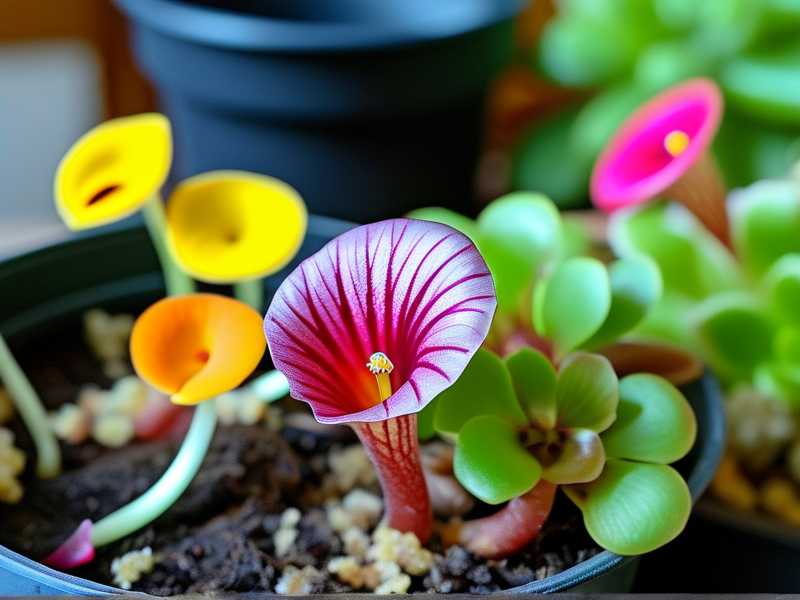
The rosette will shrink and look half-dead. That's normal. Don't panic and don't "rescue" it with extra water. I did that once and drowned a perfectly healthy dormant plant.
Pests, Yellow Leaves, and Other Problems
Yellow or translucent lower leaves — usually too much water, or the start of rot. Check the crown right away.
Brown crispy leaf tips — low humidity or too much direct sun. Move the plant, don't increase watering.
Sudden collapse of the whole rosette — root rot at the crown. Unpot immediately.
Fungus gnats — wet soil. Let the top inch dry.
Mealybugs — white fuzz in the leaf joints. Dab with 70% isopropyl alcohol on a cotton swab.
Aphids on flower stalks — wash them off with a gentle spray of water.
The 3 Mistakes That Kill New Growers
I made all three. Some of them more than once.
1. Overwatering. The classic. You love the plant, so you water it. Butterworts don't want love, they want neglect with good light. If you're unsure, wait another two days.
2. Putting it in the wrong light. A butterwort in a dark corner turns pale and weak. A butterwort in full afternoon sun turns to paper. Bright indirect is the answer, and it's a narrower window than most people expect.
3. Using the wrong pot. Big pots, deep pots, pots without drainage, decorative pots with no holes. All bad. Small, shallow, well-draining, always.
What My 2-Week Recovery Actually Looked Like
I kept notes, because I always do when I'm rescuing something.
Days 1 to 3: Plant looks worse. Two more outer leaves go soft. I removed them. This is normal — the plant is still losing tissue it can't support.
Days 4 to 7: No change. Genuinely nothing. I had to stop myself from watering it. This is the hardest part.
Days 8 to 10: The remaining leaves firm up slightly. Color improves from grey-green to a healthier green.
Day 11: I tugged very gently on the crown and felt resistance. That means new roots are anchoring. Best feeling in the world.
Days 12 to 14: A tiny new leaf unfurls from the center. It's smaller than a grain of rice. That's your green light.
If you get a new leaf at two weeks, you're through the worst of it.
Questions I Get Asked a Lot
Can I save a butterwort with no roots left at all?
Sometimes. If the crown is still firm and there's at least one healthy leaf, you can treat it like a leaf pulling — lay it on damp perlite under a clear cup and wait. It takes four to eight weeks, but I've brought back plants this way.
Should I use hydrogen peroxide on the roots?
I don't. It kills the bacteria, but it also damages the healthy root tissue you're trying to save. Sulfur powder on clean cuts does the job without the collateral damage.
How long before I can water normally again?
Once you see two or three new leaves, usually four to six weeks. Even then, go back to the normal routine slowly. I always keep mine on bottom-watering permanently now — I just don't trust myself with a watering can anymore.
A Few Last Things
Recovering a butterwort takes patience more than skill. The plant does the work. You just have to stop making it worse.
Keep the mix gritty. Keep the water clean. Keep the light bright but soft. Don't feed it until it's growing. And when in doubt, do nothing for another day.
That's really the whole thing. My first rescue failed because I couldn't leave it alone. My last three worked because I finally learned to.





