 bluename
 How to Care for Pinguicula with Nutrient Deficiency: A Grower’s Recovery Journal
I’ll be honest—the moment I noticed my beloved Pinguicula ‘Aphrodite’ starting to look off, my heart sank. Its usually plump, dewy leaves had lost their vigor, turning pale and slightly stunted at the center. New growth seemed hesitant, almost weak. As a dedicated carnivorous plant enthusiast, I knew this wasn’t a typical dormancy signal or a lighting issue. After ruling out pests and improper watering, the evidence pointed clearly to a challenge many growers face but often misdiagnose: nutrient deficiency in Pinguicula. If you’re seeing similar signs—lackluster growth, discoloration, or a general failure to thrive despite good light and water—you might be dealing with the same problem. Through my own hands-on trial, error, and a dedicated two-week recovery plan, I learned how to correctly identify and address nutrient deficiencies in these fascinating butterworts.
Understanding the Paradox: Do Carnivorous Plants Need Fertilizer?
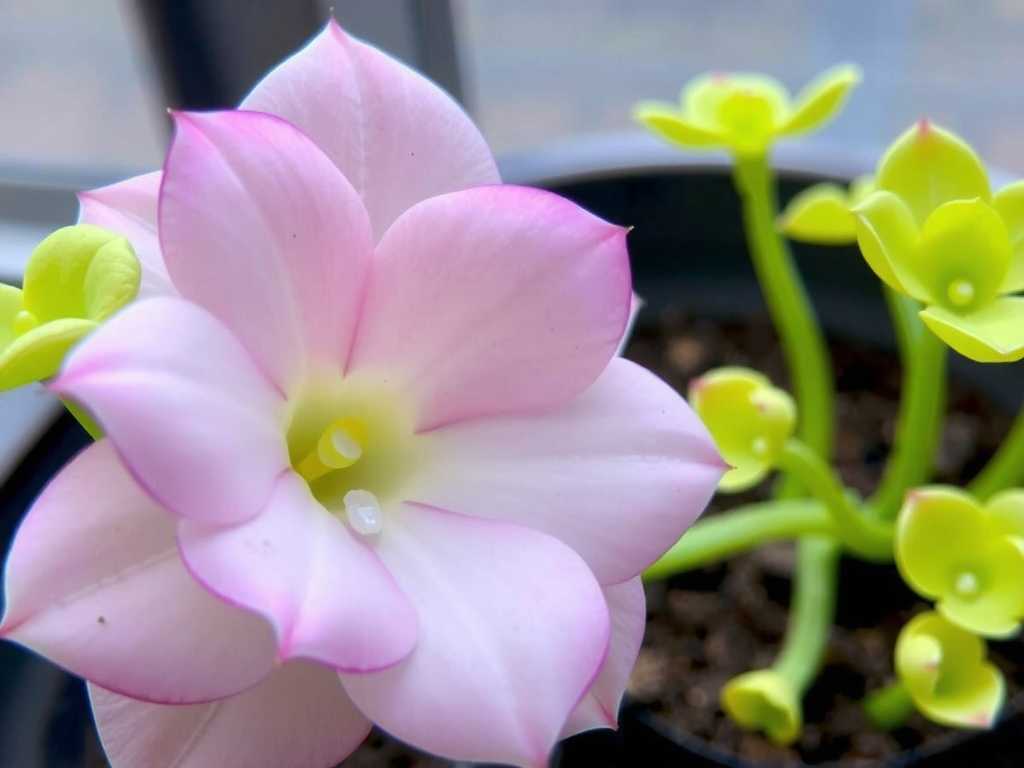
This is the core question. Pinguicula derive nutrients by trapping insects on their sticky leaves. In nature, this supplements the poor mineral content of their native soils. In our homes, especially for indoor-grown plants or hybrids in sterile media, their “prey” can be scarce. They can literally starve for specific nutrients. However, their roots are extremely sensitive to mineral salts found in standard fertilizers and potting soils. This creates a delicate balancing act. As noted in resources from the Carnivorous Plant Society (CPS) and discussions with experts, the key is providing nutrients in a form and dosage the plant can safely absorb, primarily through its leaves, mimicking natural prey.
My Step-by-Step Recovery Protocol for a Nutrient-Deficient Pinguicula
Before starting, I isolated the affected plant to monitor it closely. My setup was a south-east facing windowsill with bright, indirect light, and humidity around 50-60%.
Step 1: Accurate Diagnosis – It’s Not Always Hunger The pale new growth suggested a lack of nitrogen, crucial for chlorophyll and vigorous growth. However, jumping straight to feeding is risky. I first confirmed my growing conditions:
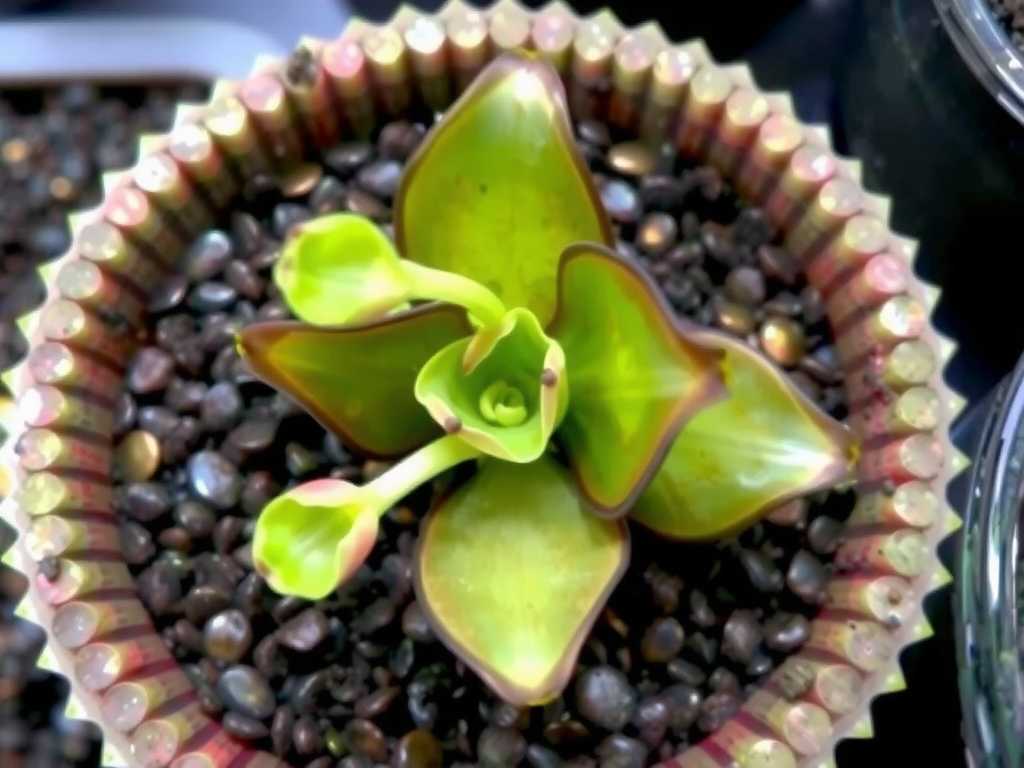
- Medium: A 50/50 mix of perlite and silica sand, completely nutrient-free.
- Water: Only distilled or rainwater (TDS < 50 ppm).
- Light: 12-14 hours under a grow light, which was sufficient. Since all these were correct, and the plant had caught no insects for weeks, nutrient deficiency was the likely culprit. I decided against repotting to avoid additional stress.
Step 2: Choosing the Right “Food” and Method Standard garden fertilizer is a death sentence. I needed a highly diluted, foliar-applicable option. Following advice aligned with International Carnivorous Plant Society (ICPS) guidelines, I chose a max-strength orchid fertilizer (30-10-10 NPK) because of its urea-free nitrogen formulation and designed for sensitive plants.
- The Critical Dilution: The bottle recommended 1 tsp per gallon. For my Pinguicula, I diluted it to 1/4 of the recommended strength. This is non-negotiable. My mix was roughly 1/4 tsp per gallon of distilled water.
- Application Tool: A fine mist spray bottle.
Step 3: The First Application and Immediate Setup On Day 1, I lightly misted the leaves in the early evening, just enough to form tiny droplets on the sticky leaves, avoiding the crown center where new growth emerges. I did not drench the soil. The goal was to let the plant digest this mimic of insect “juices” through its leaf enzymes. I placed it back under its light cycle.
The Two-Week Observation Diary: Progress, Pitfalls, and Adjustments
Days 1-3: No visible change. I resisted the urge to re-apply. Overfeeding is the fastest way to burn the leaves and kill the plant.
Days 4-7: The First Sign – A Color Shift. I noticed the very faintest hint of a deeper green returning to the mid-vein of the younger leaves. This was promising! However, I also spotted a single leaf tip showing a slight brown edge on Day 6—a warning sign of potential burn. My Mistake and Fix: I realized I had sprayed too closely, causing larger droplets that pooled. For the next application, I held the sprayer farther away for a finer, more even mist and ensured no droplets rolled into the crown.
Days 8-10: Visible Growth Response. The new, previously stunted growth at the center began to visibly unfurl and expand. It was noticeably greener and more robust than the growth from the previous two weeks. This confirmed the plant was actively using the applied nutrients. I performed a second, very light foliar feed on Day 8 using the same ultra-dilute solution and improved misting technique.
Days 11-14: Stabilization and Recovery Confirmation. No further leaf burn occurred. The overall plant color improved. The newest leaf was almost at its expected size and stickiness. The plant had shifted from survival mode back to growth mode. I discontinued further feeding at this point, as the goal was to correct the deficiency, not create dependency.
Key Lessons and Best Practices for Long-Term Health
- Less is Always, Always More: It’s far easier to add a tiny bit more later than to reverse fertilizer burn. My 1/4 strength dose was effective and safe.
- Foliar is Safer Than Root: Applying to the leaves bypasses the sensitive root system. Never pour fertilizer solution into the potting medium.
- Frequency Beats Potency: A single, ultra-dilute feeding every 3-4 weeks during active growth is sufficient for most indoor Pinguicula. They are slow feeders.
- Environment is Foundational: No amount of feeding will fix poor light, wrong water, or inappropriate soil. Address these first.
- Observe Relentlessly: Document changes with photos. The subtle color shift I saw on Day 4 was my reward for careful daily observation.
Addressing Your Top Concerns About Feeding Butterworts
Can I use fish food or other alternatives? Yes, but with caution. A single, tiny betta fish pellet placed on a leaf every few weeks is a popular method. I tried this once but found it sometimes molded before fully digesting in lower humidity. The diluted orchid fertilizer method gave me more control and consistent results.
How do I tell the difference between nutrient deficiency and sunburn? Sunburn typically causes bleached, white or crispy brown patches directly on the most light-exposed areas. Nutrient deficiency manifests as an overall pallor or yellowing, often starting with new growth and affecting the plant systemically. When in doubt, check your light distance and duration before considering feeding.
My Pinguicula is in a peat mix. Should I feed it differently? Peat retains minerals more than inert media. If you use a peat-based mix, be even more conservative. The risk of salt buildup is higher. I strongly recommend switching to an inert medium long-term, but if not, reduce feeding frequency by half and flush the pot thoroughly with distilled water every month to leach out any accumulated salts.
Seeing your Pinguicula regain its vibrant color and vigorous growth is immensely rewarding. The journey taught me that these plants are resilient when given precisely what they need. The secret isn’t in constant feeding, but in providing a perfect base of light, water, and medium, then offering the gentlest possible nutritional support only when clear signs of hunger appear. By mimicking the scant nutrients of a natural insect catch, we can help our butterworts not just survive, but truly flourish.





