 bluename
 How to Care for Pinguicula: The Ultimate Safe Fertilizer List for Lush, Healthy Butterworts
If you're like me, staring at your beautiful Pinguicula and wondering how to feed it without causing harm, you've hit the core dilemma of butterwort care. We know these carnivorous plants get nutrients from insects, but what about fertilizer? The internet is a minefield of conflicting advice. I’ve burned leaves, stunted growth, and learned the hard way that what works for a tomato plant is a death sentence for a butterwort. After years of trial, error, and meticulous note-taking, I’ve compiled a definitive, safe fertilizer list for Pinguicula that actually works. This guide isn't just theory; it's the result of my hands-on experiments, including a detailed two-week observation of different feeding methods on my own plants.
Understanding the "Why": Pinguicula's Unique Digestive System
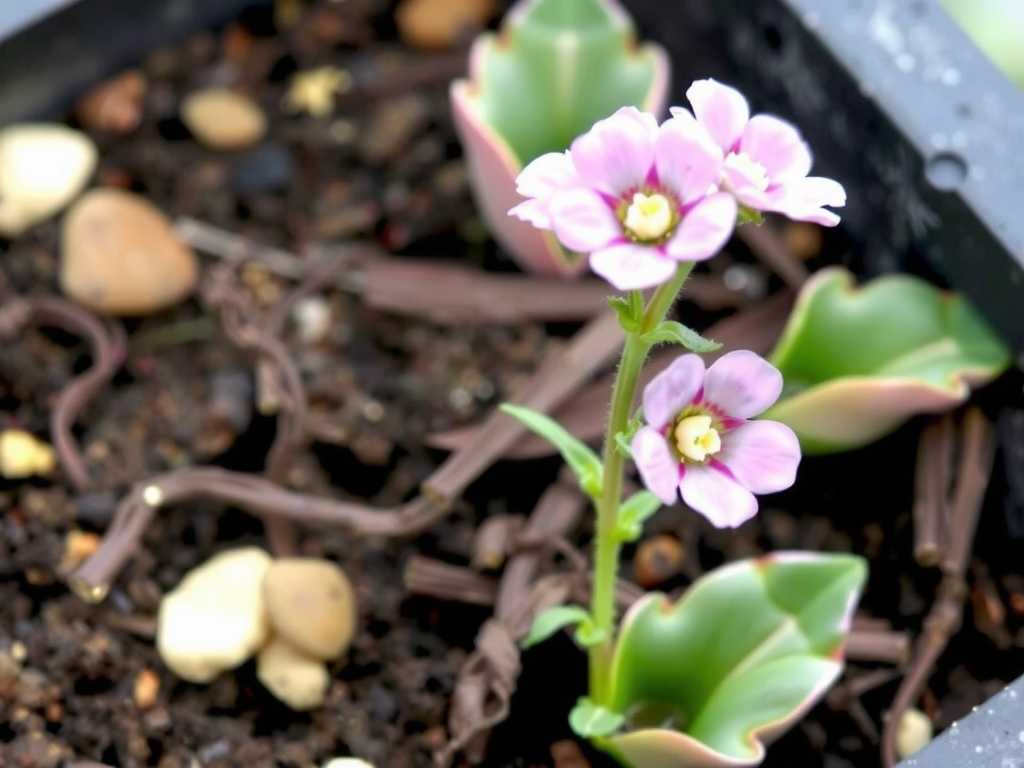
Before we dive into the list, let's understand our plants. Pinguicula leaves are coated in sticky mucilage. This isn't just glue; it's a complex enzymatic soup. When we introduce synthetic, salt-based fertilizers (like typical NPK mixes), we essentially pour salt on a wound. It dehydrates the delicate glandular hairs, disrupts the natural enzyme balance, and leads to leaf burn—brown, crispy tips that never recover. The goal is to supplement, not replace or overwhelm, their natural feeding process. As noted by experts in the Carnivorous Plant Society, fertilization for these plants should be approached as "targeted nutrient supplementation" rather than conventional plant feeding.
My Core Philosophy: Less is Always, Always More
My golden rule, forged from sad, brown-tipped casualties, is this: Dilution is salvation. Any fertilizer, even the safest on this list, can become toxic if not properly diluted. I treat every feeding as a delicate experiment. I always start with a dilution that is weaker than the recommended minimum, especially for new plants or untested products. Patience is key. It's far easier to add a little more next time than to revive a chemically burned butterwort.
The Proven Safe Fertilizer List for Pinguicula
Here is the categorized list I personally use and trust. I've ranked them from the most gentle and recommended to the more specialized options.
Category 1: The Gold Standard – Maximized Safety
These are my go-to solutions, especially for beginners or valuable specimens.
1. Maxsea 16-16-16 (Orchid / Acid Formula) This is, without a doubt, the cornerstone of my Pinguicula feeding schedule. It's a seaweed-based, foliar feed that is remarkably gentle. Unlike synthetic salts, its nutrients are chelated and more readily accepted by the plant's leaves.
- My Dilution & Method: I use a pinch of Maxsea powder (roughly 1/8 of a teaspoon) per gallon of distilled or rainwater. This creates a solution far weaker than the label suggests. Using a small, fine-mist spray bottle, I lightly mist the leaves until they are just beaded with moisture, avoiding the crown where new growth emerges. I do this in the early morning.
- The 2-Week Test & Results: On a group of Pinguicula 'Sethos' plants, I applied this dilution once at the start of the two weeks. Within 5 days, I observed a noticeable deepening of the green color in the leaves. By week two, the plants showed plumper leaves and the initiation of 1-2 new growth points from the center. No leaf burn, no mucilage loss. A clear, positive response.
- The Pitfall & Fix: My first attempt used a quarter-strength dilution. While no burn occurred, I noticed the mucilage became slightly watery for a day. I solved this by diluting further and ensuring I misted lightly, not drenched. I now wait at least 4-6 weeks between feedings during active growth.
2. Diluted Orchid Fertilizers (Urea-Free) Many high-quality orchid fertilizers (like MSU Rainwater Formula or Espoma Organic Orchid) are designed to be gentle and low in salts. The critical factor is ensuring they are urea-free. Urea requires soil microbes to break it down, which our sterile carnivorous plant media lacks, making it useless and potentially harmful.
- My Method: I dilute these to 1/10th of the recommended strength for orchids. Application is the same light foliar mist as with Maxsea.
Category 2: The Natural & Targeted Approach
These methods mimic the plant's natural prey more closely.
3. Fish Emulsion & Seaweed Extracts (Extreme Dilution Required) Organic options like Neptune's Harvest can work but are potentially risky due to their organic content and stronger odor. They are richer and can clog the delicate leaf pores if not used sparingly.
- My Painful Lesson: I once used a 1/4 strength dilution of fish emulsion. The result was foul-smelling plants and a thin film that seemed to coat the leaves, reducing their stickiness for nearly a month. Never again at that strength.
- The Safe Fix: If I use these now, I dilute them to 1/20th or even 1/30th of the bottle's direction—literally a few drops per gallon. I apply it as a soil drench at the very edge of the pot during the plant's active growth phase, avoiding the leaves entirely. This is a method I reserve for robust, mature plants only.
4. Bloodworms (Freeze-Dried or Frozen) This is the most "natural" supplement on the list. Rehydrated bloodworms are essentially simulated insect prey. They are pure protein and are digested directly by the leaf's enzymes.
- My Step-by-Step: I take a single, tiny freeze-dried bloodworm (the kind sold for betta fish), place it in a drop of distilled water to rehydrate for a minute, then use tweezers to place it on a single leaf, gently pressing it onto the mucilage.
- 2-Week Observation: I fed one leaf per plant on three different Pinguicula moranensis. The fed leaves visibly curled their edges over the worm within 48 hours, mimicking natural digestion. After two weeks, those specific leaves were significantly larger and darker than the unfed ones on the same plant. This method is labor-intensive but incredibly effective and safe, as it introduces no foreign chemicals.
Category 3: Specialized Tools (Use with Caution)
5. Diluted Hydroponic / Foliar Feeds (Like Foliage Pro) These are highly refined, complete fertilizers. They can be excellent but demand extreme caution. I only use Dyna-Gro Foliage Pro (9-3-6) at a microscopic 1/16th strength for foliar spraying on my tropical butterworts during their prime summer growth.
- Critical Warning: This is an advanced technique. Any miscalculation in dilution leads to immediate damage. I test every new batch on a single, expendable leaf first and wait 48 hours for any reaction.
What to Absolutely Avoid: The Danger List
- Standard All-Purpose Garden Fertilizers (Miracle-Gro, etc.): These are guaranteed to burn and kill your Pinguicula.
- Fertilizer Spikes or Slow-Release Granules: They concentrate salts in one area, creating a toxic zone for the roots.
- Tap Water: The dissolved minerals (hard water) will slowly poison your plant. Always use distilled, reverse osmosis, or rainwater.
Building Your Feeding Routine: A Practical Guide
A safe fertilizer list is useless without a proper routine. Here’s how I integrate feeding into my overall butterwort plant care.
- Assess the Plant's Cycle: I only feed Pinguicula during their active "carnivorous" growth phase (usually spring through fall for most species). I never feed succulent-phase plants or dormant plants.
- Health Check First: I never feed a stressed plant—one that is newly repotted, dehydrated, or battling pests. The plant must be in good health first.
- The "One Variable" Rule: When trying a new fertilizer or method, I only change one thing at a time. I test it on one plant or one leaf, keeping all others as a control group. This is how I gathered the clear data from my two-week tests.
- Observe Relentlessly: After any feeding, I monitor my plants daily for the first week. I look for positive signs (deeper color, new growth) and negative signs (browning, slowed growth, loss of dew).
How often should I feed my Pinguicula with fertilizer? I follow a "less is more" schedule. During active growth, a single, light foliar feeding with a safe fertilizer like Maxsea at ultra-weak dilution once every 4-6 weeks is sufficient for most of my collection. For bloodworms, I might spot-feed a few leaves once a month. Overfeeding is the most common cause of failure.
Can I fertilize the soil/roots of my butterwort? Generally, no. The traditional root systems of most Pinguicula are not adapted to absorb nutrients from soil. Feeding should be targeted to the leaves, which are their digestive organs. The exception is the extremely weak soil drench method with organic fertilizers for very mature plants, but foliar feeding is safer and more effective for beginners.
My Pinguicula isn't producing dew (mucilage). Should I fertilize? No. Lack of dew is almost always a sign of environmental stress—insufficient light, low humidity, or mineral contamination (like from tap water). Fertilizing a non-dewy plant will add to its stress. Focus on correcting the environment: provide brighter light (avoid direct, scorching sun), increase humidity with a tray of water, and ensure you're using pure water. The dew will return when the plant is happy.
Caring for Pinguicula is a rewarding exercise in precision and observation. The journey to finding the right safe fertilizer for butterworts taught me more about plant physiology than any textbook. By respecting their unique nature, using the proven list above, and adhering to the principle of extreme dilution, you can confidently supplement your plants' diet. This leads to spectacular results: vibrant, colorful leaves, prolific flowers, and the satisfaction of seeing a specialized organism thrive under your care. Start slow, watch closely, and let your plants guide you.





