 bluename
 How to Care for Pinguicula: Avoid Harmful Fertilizers and Nourish Your Butterwort Right
I’ve killed my fair share of Pinguicula, or butterworts. There, I said it. It’s a confession many carnivorous plant enthusiasts whisper. We bring home these dewy, sticky-leaved beauties, fascinated by their insect-trapping prowess, only to watch them slowly wither. More often than not, the culprit isn’t neglect—it’s misguided kindness, specifically, the wrong fertilizer. If you’ve ever wondered why your Pinguicula isn’t thriving despite your care, you’ve come to the right place. This guide is born from my own failures and a two-week experiment that finally showed me the light on how to care for Pinguicula by strictly avoiding harmful fertilizers.
Understanding the “Why”: The Delicate Physiology of Pinguicula
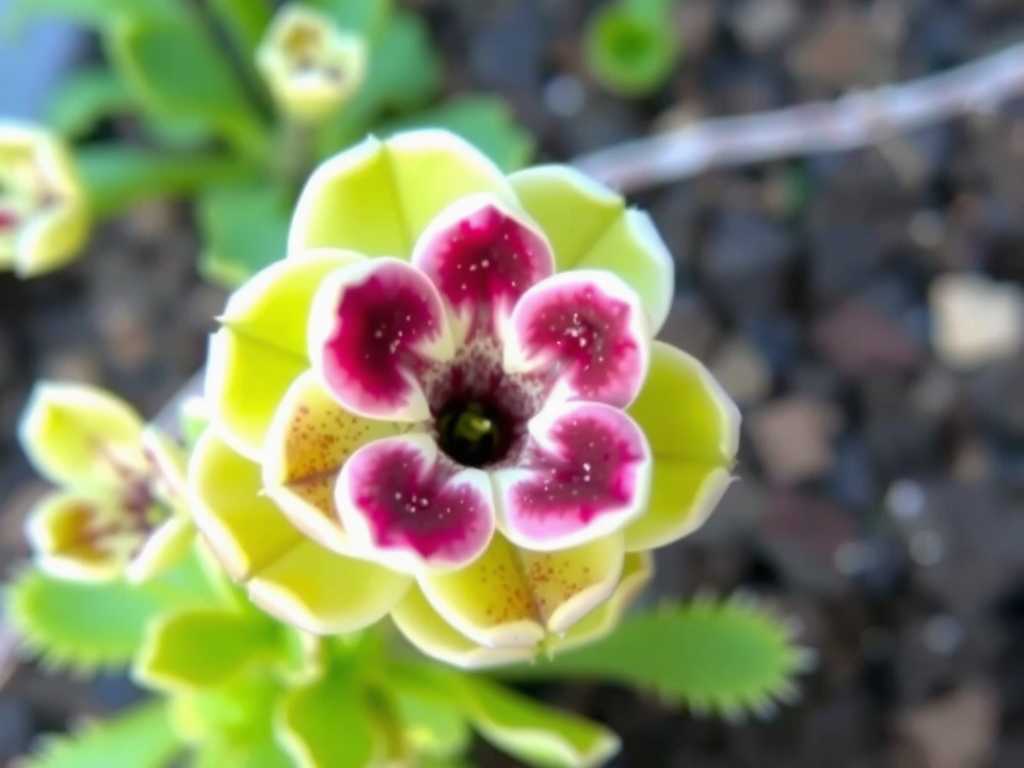
To avoid harmful fertilizers, we must first understand why they are harmful. Pinguicula are native to nutrient-poor environments like bogs and rocky outcrops. Their specialized, glandular leaves are their primary adaptation: they catch and digest insects to supplement the minimal nitrogen and other nutrients available in their soil. Their root systems are fine and delicate, evolved for anchorage and water absorption, not for processing concentrated mineral salts.
When we apply standard houseplant fertilizers, even in dilution, we bombard these sensitive roots and leaves with a tidal wave of salts and nutrients they cannot handle. This leads to root burn, which destroys the plant’s ability to uptake water, and leaf burn, where the precious digestive glands are scorched. The result is a rapid decline—blackened roots, browned leaves, and a dead plant. Experts from the International Carnivorous Plant Society (ICPS) and experienced growers consistently stress that fertilizing Pinguicula plants requires a radically different approach than for typical foliage plants.
The Great Fertilizer Experiment: My 2-Week Observation
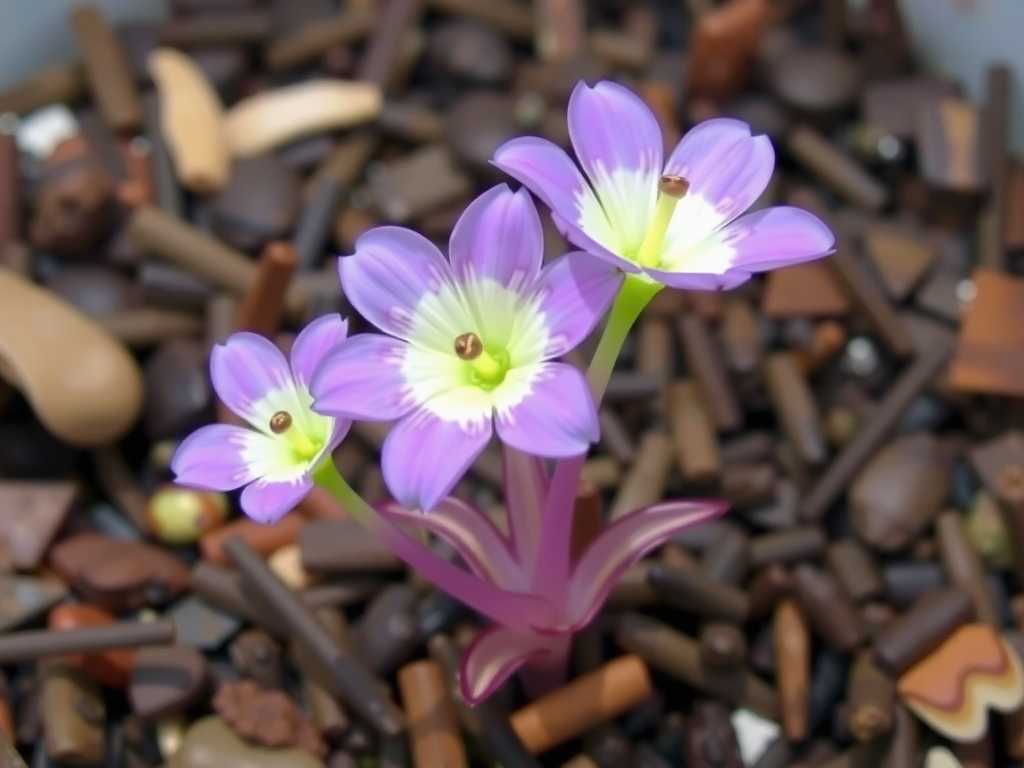
Frustrated with vague advice, I decided to run a controlled test on three healthy Pinguicula moranensis specimens I had acquired from a reputable nursery. My goal was to visually document the effects of different fertilization approaches.
- Plant A (The Control): Received only distilled water, via the tray method, keeping the soil consistently moist.
- Plant B (The “Standard” Fertilizer Victim): Received a single, very diluted dose (roughly 1/8th strength) of a balanced, urea-free liquid orchid fertilizer in its water tray, as some general gardening forums had suggested.
- Plant C (The Foliar-Fed Subject): Received no fertilizer in the soil. Instead, once a week, I lightly misted its leaves with a highly diluted epiphytic orchid fertilizer (1/4 strength), focusing on the newer, stickier leaves, a method noted by renowned grower and author Barry Rice in his carnivorous plant care guides.
The changes were stark and instructive.
Week 1 Observations:
- Plant A continued growing steadily, producing a new, small leaf. It looked perfectly content.
- Plant B showed the first signs of distress. The tips of two older leaves began to yellow slightly, and the dew on its leaves seemed less pronounced. I initially thought it was adjusting.
- Plant C showed no negative reaction. Its leaves remained dewy and vibrant.
Week 2 Observations & The “Aha!” Moment:
- Plant A remained healthy.
- Plant B’s condition worsened dramatically. The yellowing spread, leaf edges turned brown and crispy, and the plant developed a general wilted appearance despite wet soil—a classic sign of root damage. I immediately removed it from the fertilized water, flushed the pot repeatedly with distilled water, and repotted it into fresh, nutrient-free media. This was the “pit” I had fallen into before: assuming dilution was enough. It wasn’t.
- Plant C, however, was the revelation. Not only did it show no burn, but it also pushed out a noticeably larger and stickier new leaf compared to Plant A. The foliar feeding was being absorbed directly by the leaves, mimicking how it gains nutrients from prey, without assaulting the roots.
This hands-on trial solidified the rule: safe fertilizer for butterworts is not about finding a “safe” product to pour into the soil; it’s about choosing the right product and applying it in the only way these plants can tolerate.
Your Action Plan: A Step-by-Step Guide to Safe Nourishment
Based on my research and the experiment’s results, here is your actionable plan to fertilize Pinguicula without harm.
Step 1: Ditch the Soil Fertilizers Completely Your first and most crucial step is to banish the thought of adding any fertilizer to the watering can or soil mix. The growing medium for Pinguicula must be inert and nutrient-free. A mix of peat moss and perlite (or silica sand) in a 50:50 ratio is the gold standard. Any fertilizer in this medium is a poison, not a food.
Step 2: Embrace the Foliar Feeding Method This is the secret sauce for how to care for Pinguicula and encourage vigorous growth, especially for non-carnivorous “winter succulents” phase plants or those grown indoors with limited access to insects.
- Choose Your Fertilizer: Select a fertilizer designed for epiphytic orchids or air plants. These are typically urea-free and formulated for foliar absorption. Brands like Maxsea or Better-Gro Orchid Food are popular in the carnivorous plant community.
- Dilute, Then Dilute Some More: The label’s dilution is for robust orchids. For Pinguicula, you need a much weaker solution. I use a dilution of 1/4 teaspoon per gallon of distilled water, which is roughly one-quarter of the already weak orchid recommendation.
- Application Technique: Using a fine mist spray bottle, lightly mist the leaves of your Pinguicula, ensuring you coat both the upper and lower surfaces. Do this in the morning so the leaves can dry before evening. Crucially, avoid spraying the center of the rosette (the crown) where new leaves emerge, as standing water there can cause rot.
- Frequency is Key: Less is more. During the active growing season (spring-fall), foliar feed no more than once per month. In winter, when many species form a tight, non-carnivorous succulent rosette, stop fertilizing entirely.
Step 3: Let Nature Do the Work (The Best Alternative) The simplest and most natural method is to allow your plant to catch its own food. If grown outdoors or on a sunny windowsill, a healthy, dewy Pinguicula will catch gnats, springtails, and other small insects effortlessly. This provides a perfectly balanced, slow-release nutrient source. My healthiest plants are the ones I feed the least, trusting their own biology.
Troubleshooting: Signs You’ve Used a Harmful Fertilizer
Even with the best intentions, mistakes happen. Here’s how to identify and fix fertilizer damage:
- Leaf Burn: Brown, black, or crispy leaf tips and margins. The dew disappears.
- Root Rot: The plant is wilted and soft despite wet soil. Upon unpotting, roots are black, mushy, and foul-smelling.
- The Rescue Protocol: Immediately remove the plant from any fertilized medium. Gently wash all soil from the roots using distilled water. Trim away any black, rotten roots and dead leaves. Repot into completely fresh, nutrient-free medium. Water only with distilled water and place in bright, indirect light to recover. Do not attempt to fertilize again for several months.
My Pinguicula’s leaves are losing their dew. Should I fertilize? No, lack of dew is almost never a fertilizer issue. It is most commonly caused by low humidity, water quality (using tap water with dissolved minerals that clog the glands), or insufficient light. Address these factors first—increase humidity with a tray of water nearby, use only distilled or rainwater, and provide several hours of bright, indirect sunlight.
Can I use fish emulsion or worm castings as a natural fertilizer? I strongly advise against it. While “organic,” these products are still high in nutrient concentration and salts. They will decompose in the soil, releasing compounds that will harm the delicate root system and alter the soil chemistry, leading to the same damaging effects as chemical fertilizers.
How do I know if my Pinguicula actually needs fertilizer? If your plant is growing in good light, with pure water and proper humidity, and is catching occasional insects, it likely needs no supplemental fertilizer at all. Fertilizer should be seen as a occasional boost for mature, actively growing plants, not a routine requirement. If growth is stunted and all other conditions are perfect, then consider the ultra-dilute foliar spray method, but always err on the side of underfeeding.
Caring for Pinguicula is a lesson in restraint. Their beauty is a direct result of their evolutionary frugality. By understanding that their leaves are both their stomach and their lungs, we learn to nourish them on their terms. Avoiding harmful fertilizers isn’t about deprivation; it’s about providing the specific, minimalist conditions that allow their unique carnivorous nature to flourish. Stick to pure water, a lean soil, bright light, and perhaps an occasional, highly diluted foliar mist, and you’ll be rewarded with a resilient, dewy, and fascinating butterwort that thrives on your careful neglect.





