 bluename
 How to Care for Pinguicula: Common Myths Debunked
I remember the first time I brought home a delicate, jewel-toned Pinguicula, or butterwort. I was captivated by its sticky, dewy leaves and the promise of natural pest control. Like many new enthusiasts, I dove headfirst into online forums and care sheets, only to find myself tangled in a web of conflicting advice and persistent myths. My plant suffered—leaves browned, growth stalled, and that characteristic dew vanished. It was frustrating. After years of trial, error, and countless conversations with expert growers, I’ve learned that successful Pinguicula care isn’t about following oversimplified rules, but understanding their unique biology. In this guide, I’ll dismantle the most common misconceptions I once believed and share the straightforward, effective practices that transformed my collection from struggling to thriving.
Myth 1: "They’re Just Like Sundews or Venus Flytraps" This is perhaps the most fundamental and damaging myth. While all are carnivorous, lumping them together is a recipe for failure. Pinguicula have distinct needs, primarily centered around their root systems and growth cycles.
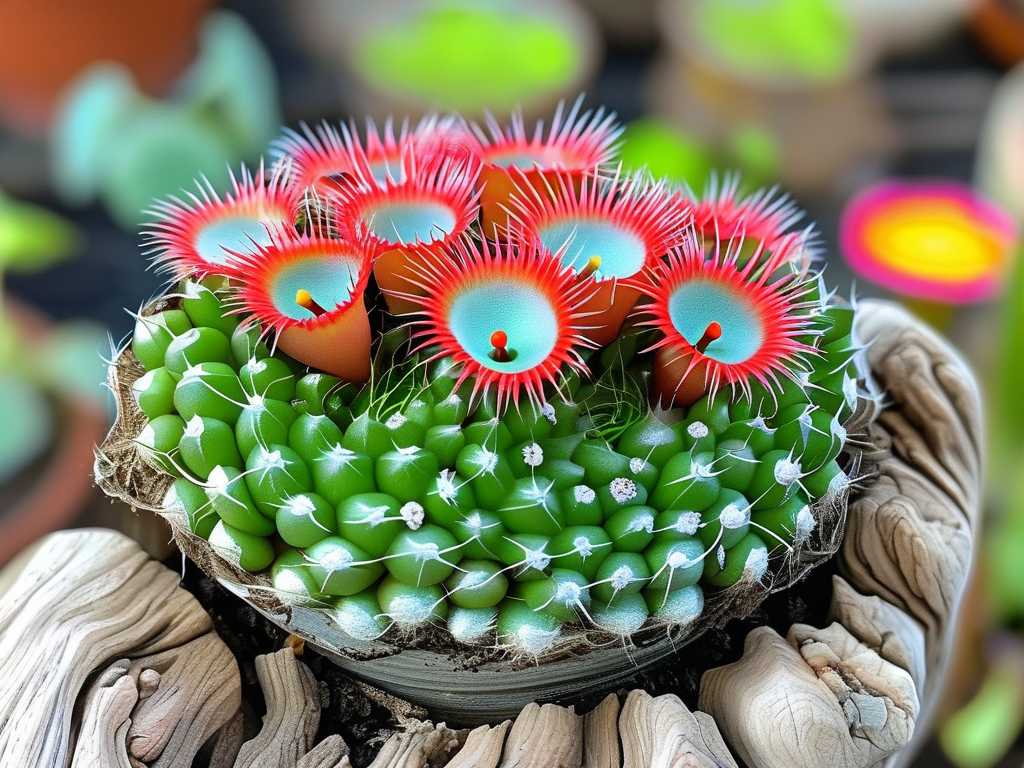
The Critical Importance of Understanding Growth Cycles Pinguicula generally fall into two categories: tropical/subtropical (often Mexican) and temperate. Their care diverges dramatically based on their dormant phase. My early mistake was treating my Mexican Pinguicula like a temperate one, expecting a winter hibernation in the fridge. It nearly died. Here’s what I do now:
- For Mexican/Tropical Pinguicula: As daylight shortens, they form a tight, non-carnivorous "succulent" rosette. I reduce watering significantly, allowing the soil to become just barely damp. I keep them in bright light at cool room temperatures (around 50-60°F/10-15°C). They are not bone-dry, nor are they actively growing. This period lasts a few months.
- For Temperate Pinguicula: These require a true, cold dormancy. In late autumn, as they form a tight hibernaculum (bud), I move them to a cold frame or an unheated garage where temperatures stay reliably between 32-40°F (0-4°C) for 3-4 months. The soil is kept just slightly moist to prevent desiccation.
Ignoring these cycles—by keeping a temperate butterwort warm and wet all winter, or letting a Mexican one freeze—will exhaust and kill the plant. The Royal Horticultural Society (RHS) emphasizes the necessity of recognizing these physiological rest periods for long-term plant health, a principle I’ve found non-negotiable.
Myth 2: "Any Soil Will Do – They Grow on Rocks in Nature!" Yes, many grow on mineral substrates in the wild, but our pots are not wind-swept limestone cliffs. The goal is to mimic the qualities of their natural habitat: fast-draining, aerated, and nutrient-poor. Using standard potting soil or peat-heavy mixes was my second big mistake, leading to root rot.
My Proven Soil Mix and Potting Technique Through experimentation, I settled on a simple, effective mix:
- 1 part high-quality, long-fiber sphagnum moss (not peat moss, which is too fine)
- 1 part perlite
- 1 part horticultural pumice or lava rock
I rehydrate the sphagnum, mix it thoroughly with the inorganic components, and pot in a plastic pot with ample drainage holes. I always use a shallow pot, as Pinguicula have relatively small root systems. A deep pot holds too much moisture. The American Horticultural Society’s (AHA) guidelines on creating well-aerated media for specialty plants perfectly align with this approach, stressing drainage to prevent anaerobic conditions.
A Two-Week Observation: The Repotting Turnaround Two weeks ago, I repotted a Pinguicula 'Sethos' that was languishing in an old, decomposed peat mix. Its leaves were pale and barely dewy. After gently rinsing its roots and placing it in the new mix, I observed a clear timeline:
- Days 1-5: The plant seemed static, simply settling in.
- Days 6-10: I noticed a subtle firming of the central leaves and the very beginnings of new dew production on the leaf edges.
- Days 11-14: A definite new, small leaf emerged from the center, glistening with sticky mucilage. The overall color deepened to a healthier green. The improved aeration and moisture control provided an immediate, visible boost.
Myth 3: "Water Them Like a Normal Houseplant" Tap water is the silent killer of many carnivorous plants. The minerals and dissolved solids in tap water (often measured as Total Dissolved Solids or TDS) will slowly poison Pinguicula, burning their roots and preventing dew formation. I learned this the hard way when my plants became crusted with mineral deposits.
The Watering Protocol That Works I now use only one of two things: rainwater collected in a barrel, or distilled/reverse osmosis (RO) water. I keep a dedicated watering can for this purpose only. My method is the "tray method":
- I place the pot in a shallow saucer or tray.
- I fill the tray with about 0.5 inches (1-2 cm) of pure water.
- I let the plant absorb it from the bottom up.
- I allow the tray to dry out completely for a day or two before refilling. They should never sit in permanently soggy water, nor should they ever fully dry out into a bone-hard substrate.
This mimics the natural cycle of wet and slight dry-back they experience in their habitats. During their succulent-phase dormancy, I may only lightly water from the top every few weeks to prevent total desiccation.
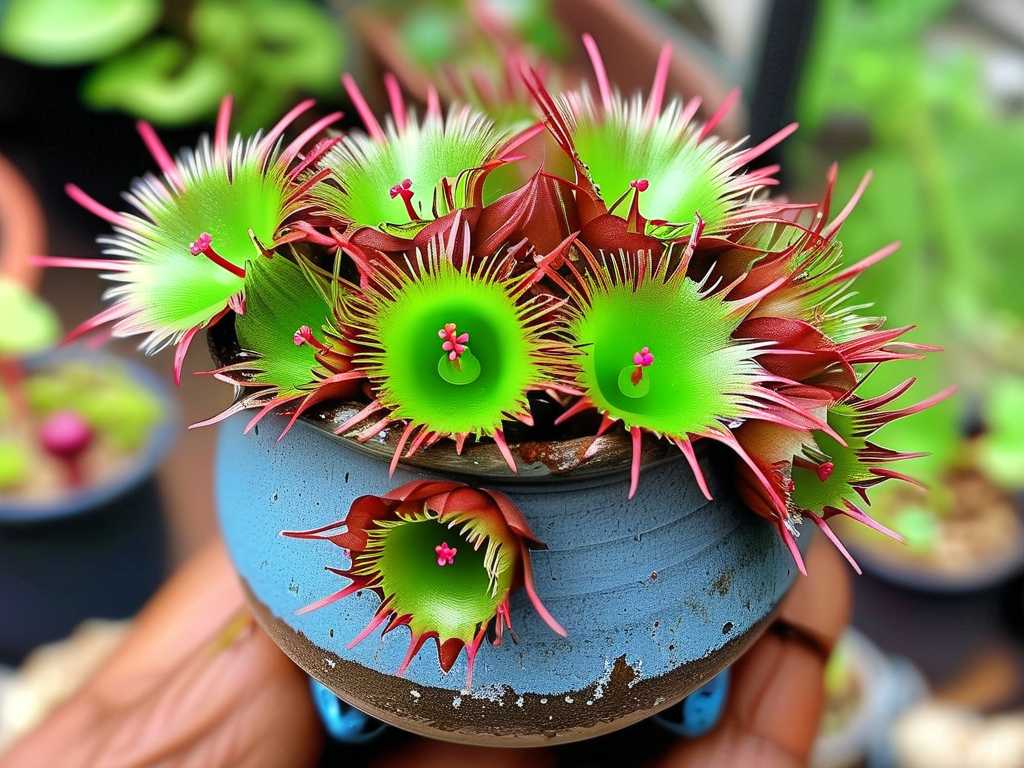
Myth 4: "They Don’t Need Fertilizer" This is a half-truth. You should never apply granular or liquid fertilizer to the soil. Their roots cannot process it. However, their leaves are designed to absorb nutrients. Denying them any nutrients, especially when grown indoors away from natural prey, can stunt growth.
Safe and Effective Feeding I use a two-pronged approach:
- Natural Prey: I place my plants outdoors in a sheltered spot during warm months. They catch gnats, springtails, and other small insects effortlessly.
- Supplemental Feeding (Indoors): If kept inside, I occasionally feed them. The best method I’ve found is using maxsea 16-16-16 orchid fertilizer at 1/4 strength. I dissolve a tiny pinch in distilled water and apply a single drop to a leaf or two every 3-4 weeks during active growth. Never overdo this. The leaves will slowly digest it. I tried fish food flakes early on, but they often led to mold; liquid Maxsea is far cleaner and more controlled.
Light: The Dew Maker Light is the engine of dew production. A common complaint is "my butterwort isn’t sticky." The answer is almost always more light. They need very bright, indirect light. A south or east-facing windowsill is ideal. I grow mine under LED grow lights (about 14 hours a day), positioned 6-8 inches above the plants. Under sufficient light, the dew will glisten like tiny diamonds. Insufficient light leads to etiolated, weak, and dry leaves.
Troubleshooting: The Pitfalls I Encountered and Fixed
- Fungus Gnats in the Soil: Ironically, while the leaves catch gnats, the larvae can live in the soil. I fought this by using a thin top-dressing of fine sand or pumice to break the lifecycle, and by being more careful with letting the water tray dry out between fillings.
- Leaf Tip Burn: This was always a sign of my water quality. Switching exclusively to rainwater/RO water eliminated this issue completely.
- Lack of Dew: As mentioned, this was solved by increasing light intensity and ensuring perfect water quality. Humidity is less critical than people think; if the light and water are right, they produce dew even in moderate (40-50%) household humidity.
Do Pinguicula need terrariums or high humidity? Not usually. While they appreciate good air flow and consistent moisture, most common Mexican and temperate varieties adapt perfectly to typical indoor humidity levels (30-50%) provided their soil moisture and light are correct. Terrariums can often create stagnant, overly humid air that promotes fungal issues.
Can I propagate my Pinguicula? Absolutely, and it’s rewarding. The easiest method is leaf pullings. During repotting, I gently pull a few healthy outer leaves away from the base, ensuring a bit of the white leaf base comes with it. I lay these on damp sphagnum moss, cover lightly with plastic to maintain humidity, and place in bright light. In a few weeks, tiny plantlets form at the base. I’ve successfully propagated Pinguicula moranensis this way multiple times.
Why are my plant’s leaves turning reddish or purple? This is usually a good sign! It’s called "blushing" and is a stress response to strong light, similar to a tan. It indicates your plant is receiving excellent light levels and is often accompanied by prolific dew. It’s not harmful but rather a mark of a happy, well-lit butterwort.
Caring for Pinguicula is a deeply satisfying journey that rewards attention to detail. By moving past the myths—understanding their specific growth cycles, providing mineral-free water and an airy soil mix, offering bright light, and feeding them safely—you unlock the secret to these captivating carnivores. My collection, once a source of anxiety, is now a constant delight, with rosettes of glistening leaves that are as functional as they are beautiful. Start with these core principles, observe your plant closely, and you’ll find that success is not only possible but predictable.





