 bluename
 How to Care for Pinguicula After Transplant Shock: A Grower’s Recovery Guide
You’ve just received your new, dewy-leaved Pinguicula in the mail, or perhaps you’ve finally worked up the courage to repot a cherished specimen. The excitement is real. But within days, your heart sinks. The once-plump leaves are wilting, the vibrant color is fading, and that charming glue-trap shine seems to have dulled. Your butterwort is clearly in distress, suffering from the dreaded transplant shock. I’ve been there, staring at a sad-looking plant, wondering if my care had doomed it. The good news? Transplant shock in Pinguicula is almost always reversible with the right, immediate care. Over the next sections, I’ll walk you through the exact steps I used to nurse my plants back to health, based on a meticulous two-week recovery protocol I developed after my own early mistakes.
Understanding the shock is the first step to fixing it. When we move a Pinguicula—whether shipping it bare-root or disturbing its roots during repotting—we damage the delicate root hairs responsible for water and nutrient uptake. The plant essentially goes into emergency mode, shutting down non-essential functions to survive. This manifests as wilting, leaf loss, or a general “pause” in growth. According to the International Carnivorous Plant Society (ICPS), minimizing root disturbance is paramount, but post-shock care is what truly determines recovery speed. My goal was to create an environment that reduces stress to zero, allowing the plant to redirect all its energy to re-establishing its root system.
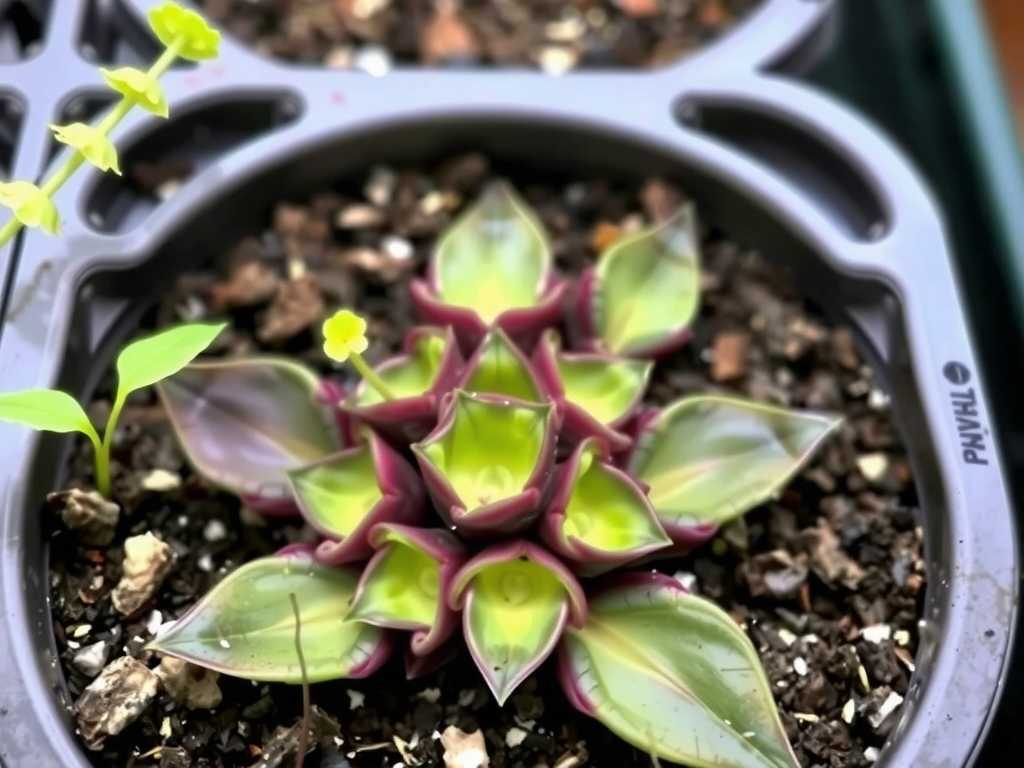
Immediate Post-Transplant Care (The First 48 Hours)
This initial period is critical. Your actions here set the stage for the entire recovery.
-
The Right Light: Bright but Indirect My biggest initial mistake was placing a shocked Pinguicula directly under my strong grow lights. The stressed plant, unable to draw up enough water to support transpiration, began to cook. I learned that mitigating Pinguicula transplant stress starts with light management. I now place all new or repotted plants in a spot with very bright, but completely indirect, light. A north-facing windowsill or the shaded periphery under a grow light bank works perfectly. This provides the energy for recovery without the dehydration risk. I maintained this for the entire first week.
-
The Humidity Haven: Boosting Moisture in the Air While Pinguicula aren’t tropical greenhouse plants like Nepenthes, a slight humidity boost post-transplant is a game-changer. It reduces moisture loss from the leaves while the roots are out of commission. I use a simple, clear plastic dome or even a large, upside-down jar to create a mini-terrarium. The key is ventilation—I prop the dome up slightly or remove it for an hour each day to prevent fungal growth. This microclimate was the single most effective step I added to my routine. The leaves perked up noticeably within just two days under the dome.
-
Watering: The Top-Watering vs. Tray Debate Here’s where I hit another snag. I’m a devout tray-waterer for my mature carnivorous plants, keeping the pot sitting in a centimeter of distilled or rainwater. For a shocked plant with compromised roots, sitting in water can lead to rot. An expert from the Carnivorous Plant Nursery advised a switch to careful top-watering for the first week. I would lightly water the surface of the medium with distilled water until just moist, not soggy, and then allow the top layer to approach dryness before repeating. This provided moisture without waterlogging the core root zone. After one week, once I saw signs of new growth, I cautiously returned to the shallow tray method.
The Two-Week Recovery Observation Log
I committed to a daily, non-intrusive check on my recovering Pinguicula moranensis. Here’s what I observed:
- Days 1-3: The plant looked stagnant. Some lower leaves continued to wilt. No panic—this is normal energy conservation.
- Days 4-7: Under the humidity dome, the wilting stopped. The central growth point (the bud) still looked firm and green, a key positive sign. I noticed the first tiny, new dewy leaves emerging from the center. This was the turning point.
- Days 8-14: I gradually removed the humidity dome for longer periods. The new leaves grew rapidly. I resumed shallow tray watering. By day 14, the plant had visibly re-established itself, with several new sticky leaves actively catching fungus gnats. The post-transplant butterwort care protocol had worked.
Long-Term Stabilization and Avoiding Future Shock
Recovery isn’t complete just because new leaves appear. The goal is robust, long-term health.
-
Resuming Fertilization: A Delicate Touch Pinguicula can absorb nutrients through their leaves. Once my plant was actively growing again (around week 3), I began a very dilute foliar feeding program. I use a 1/4 strength orchid or Maxsea fertilizer spray, applied only to the leaves, once every two weeks. This provides a nutrient boost without demanding anything from the still-developing roots. Never fertilize the soil of a carnivorous plant.
-
The Ideal Soil Mix for Resilience Preventing future shock starts at repotting. A well-draining, airy mix is non-negotiable. My standard mix, endorsed by many growers in the Carnivorous Plant Society, is a 50/50 blend of perlite and peat moss. This provides acidity, moisture retention, and perfect drainage. Repot during the plant’s active growth phase, typically spring or early summer, and handle the root ball with extreme care to promote Pinguicula root recovery from the start.
-
Recognizing and Treating Secondary Issues During my two-week watch, I spotted a minor mold fuzz on one decaying leaf—a common issue in high humidity. I immediately removed the affected leaf with sterile tweezers and increased air circulation slightly. A spot treatment with a sulfur-based fungicide can be used if needed, but physical removal and airflow usually suffice. Constant vigilance is part of the care.
Frequently Asked Questions
How long does it take for a Pinguicula to recover from transplant shock? You should see stabilization (an end to wilting) within the first week. Visible new growth typically begins in the second week. Full recovery and a return to normal growth rates can take 3 to 6 weeks, depending on the species and the severity of the shock.
Should I feed my Pinguicula while it’s in shock? Absolutely not. The plant cannot utilize the nutrients, and it adds unnecessary stress. Focus solely on providing perfect environmental conditions—light, humidity, and water. Only consider very dilute foliar feeding once you confirm active new growth has commenced.
My butterwort lost all its leaves after repotting. Is it dead? Don’t give up hope! As long as the central growth bud is firm and has a green or pinkish tint, the plant is still alive. Pinguicula can regrow from the roots or the central meristem. Continue providing bright indirect light, careful moisture, and high humidity. Patience is crucial; it may take a month or more to see new life emerge.
Watching a Pinguicula bounce back from transplant shock is deeply rewarding. It teaches patience, observation, and the resilience of these fascinating plants. The process boils down to emulating a perfect, gentle recovery room: shield it from harsh light, raise the humidity to ease its workload, and water with mindful precision. By stepping in to manage these factors, you give your plant the precious time and resources it needs to rebuild its foundation. Remember that initial wilting isn’t a death sentence—it’s a call for you to apply this focused care. With these steps, your butterwort will not only survive but will soon be thriving, its leaves glistening with sticky dew once more.





