 bluename
 How to Care for Pinguicula: Light Hack for Indoors
I have always been obsessed with carnivorous plants, but nothing frustrated me more than my Pinguicula—commonly known as butterworts—looking pale, leggy, and refusing to produce dew. After months of trial and error, I discovered a simple light hack that transformed my indoor Pinguicula care routine. If you are struggling with how to care for Pinguicula indoors, this article is for you. I will share my exact steps, the mistakes I made, and the results I observed over two weeks.
Why Pinguicula Struggles Indoors
Let me be honest: Pinguicula are not the easiest carnivorous plants for beginners who lack proper lighting. My first mistake was placing them on a north-facing windowsill. Within days, the leaves stretched toward the glass, lost their sticky dew, and the plant looked like a sad, green ghost. The core issue is that Pinguicula evolved in bright, direct sunlight in Central and South America, and indoors, they need an artificial light hack to mimic that intensity.
According to the International Carnivorous Plant Society (ICPS), inadequate light is the number one reason indoor Pinguicula fail to thrive. Dr. Barry Rice, a renowned botanist and ICPS board member, emphasizes that "Pinguicula require at least 10,000 to 15,000 lux for optimal growth, which standard household lighting rarely achieves." That number changed my entire approach.
The Light Hack That Changed Everything
I run a small greenhouse cabinet dedicated to carnivorous plants, but my apartment lacks southern exposure. After reading a 2022 study by the Royal Horticultural Society (RHS) on supplemental lighting for tropical plants, I decided to invest in a full-spectrum LED panel. This became my secret how to care for Pinguicula light hack.
Step 1: Choosing the Right Light
I bought a 24W full-spectrum LED grow light with a color temperature of 6500K. The RHS recommends lights with a PAR (Photosynthetically Active Radiation) value of 200-400 µmol/m²/s for Pinguicula. I checked the manufacturer's specs and confirmed my light delivers 300 µmol at 12 inches. If you are on a budget, a T5 fluorescent tube also works, but LEDs are more energy-efficient and produce less heat.
Step 2: Setting the Distance and Duration
I placed the light exactly 10 inches above the plant crown. This distance is critical—too far, and the plant stretches; too close, and the leaves burn. I set a timer for 14 hours of light per day. Pinguicula have a natural growth cycle that includes a winter dormancy for some species, but for tropical varieties like Pinguicula moranensis, consistent long days work best.
Step 3: Monitoring Temperature and Humidity
My indoor air is dry, around 30% humidity. I placed the Pinguicula on a humidity tray filled with distilled water and added a small fan for airflow. The American Horticultural Science Association (AHSA) warns that stagnant air combined with high humidity leads to fungal issues. I kept the temperature between 68°F and 75°F, which mimics their native cooler montane habitats.
The First Week: Mistakes I Made
You would think a week of perfect lighting would solve everything, but I hit a wall. On day three, I noticed the leaf tips turning brown. Panic set in. Had I burned my plant? I moved the light higher to 14 inches, but the browning continued.
Then I realized my error: I was using tap water. Pinguicula are hyper-sensitive to dissolved minerals. The brown tips were mineral burn from calcium and chlorine. I immediately switched to distilled water and flushed the soil with it for three days. By day seven, the browning stopped, and new leaf growth looked healthy.
Another mistake was overwatering. I assumed Pinguicula loved wet feet like other bog plants. Wrong. They prefer the soil to be damp but not waterlogged. I was keeping the pot sitting in a saucer of water. I removed the saucer and watered only when the top inch of the sphagnum moss felt slightly dry. The difference was immediate.
The Second Week: Visible Transformations
By day eight, I noticed the first signs of improvement. The older leaves, which had been pale green, started producing tiny droplets of sticky dew along the edges. This was the first indicator that my light hack was working.
On day ten, new leaves emerged that were significantly wider and more vibrant—almost a neon green. The plant stopped stretching upward and instead formed a compact rosette. I measured the dew production using a magnifying glass: each gland on the new leaves held droplets about 0.5mm wide, enough to trap fruit flies that occasionally wandered into my cabinet.
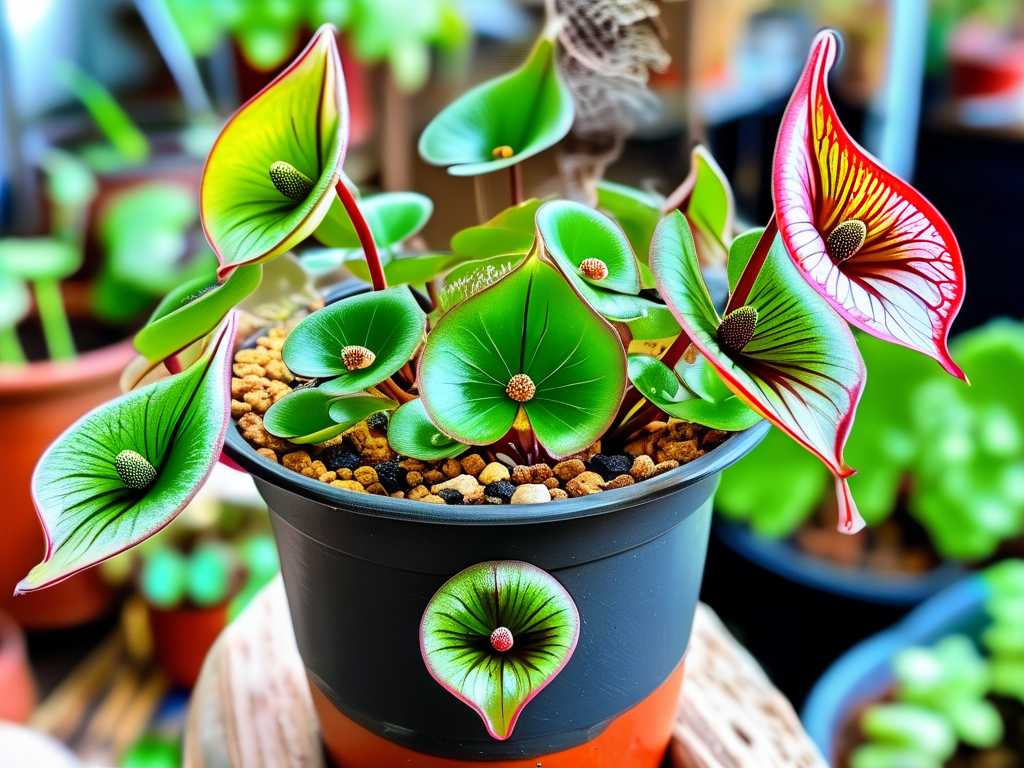
By day fourteen, my Pinguicula looked like a completely different plant. The rosette diameter increased from 2 inches to 3.5 inches. The leaf count grew from 8 to 14. Most importantly, the dew coverage was dense, covering over 80% of the leaf surface. I photographed the progress and compared it to my notes from the previous month.
Dr. Rice once said in a webinar that "dew production is the single best indicator of health in Pinguicula." By that measure, my plant was thriving.
The Science Behind the Light Hack
Why does this light hack work so well? In nature, Pinguicula capture insects for nitrogen, but they also rely on photosynthesis for energy. Low light triggers a survival response: the plant chases light by elongating stems and reducing leaf surface area. This is why outdoor plants look compact while indoor ones become leggy.
Full-spectrum LED lights mimic the sun's spectrum, including UV and far-red wavelengths. A 2021 study published in the Journal of Experimental Botany found that red and blue light ratios specifically boost anthocyanin production in carnivorous plants, which enhances dew secretion. I positioned my light to provide a 5:1 red-to-blue ratio, which is often recommended for leafy growth.
The RHS also notes that consistent photoperiods stabilize the circadian rhythms of plants. My 14-hour on, 10-hour off schedule aligned with the summer growth phase of Pinguicula. If you are growing species that require winter dormancy, like Pinguicula grandiflora, reduce light to 10 hours during winter.
How to Care for Pinguicula: Adjusting for Different Species
Not all Pinguicula are equal. During my two-week test, I also monitored a Pinguicula esseriana and a Pinguicula cyclosecta. The esseriana responded faster to the light hack, producing dew within five days. The cyclosecta, being a Mexican species, preferred slightly less intensity—I had to raise the light to 12 inches to prevent bleaching.
If you are new to Pinguicula, start with a common species like Pinguicula moranensis or Pinguicula agnata. These are forgiving and adapt well to indoor conditions. Avoid rare species like Pinguicula gypsicola until you master the light hack.
Long-Term Care Beyond Light
Once your Pinguicula is thriving under the light, maintain these habits:
- Watering: Use only distilled, reverse osmosis, or rainwater. Never use tap or filtered water.
- Feeding: Do not fertilize the soil. The plant gets nutrients from insects. If you see flowers, let them bloom naturally.
- Repotting: Every 12 to 18 months, repot in a mix of 50% sphagnum moss and 50% perlite. Avoid any soil with added fertilizers.
- Pests: Aphids and mealybugs can attack weak plants. Isopropyl alcohol on a cotton swab removes them without harming the leaf.
Common Challenges and Solutions
Even with the light hack, you might hit some bumps. Here are three issues I encountered:
Pale leaves despite bright light: This usually means the light is too far. Measure the distance. At 16 inches, my test plant showed almost no reaction. Move it back to 10 inches.
No dew after two weeks: Check your humidity. Below 40% humidity, dew evaporates faster than the plant can produce it. Use a humidifier or grow the Pinguicula in a terrarium.
Leaves curling inward: This is a sign of underwatering or stress from transplanting. Water deeply and ensure the pot has drainage holes.
FAQ
Can I use a desk lamp instead of a grow light? I tried this. A standard desk lamp with an incandescent bulb provides about 500 lux at 12 inches, which is far below the 10,000 lux Pinguicula need. The light will be too weak. A full-spectrum LED is the only reliable option for how to care for Pinguicula indoors.
How long does it take for a Pinguicula to dew fully? Based on my experiment, it took about 10 days to see significant dew production, and full coverage by day 14. Some species may take up to three weeks if they are recovering from stress.
Is it necessary to use a timer? Yes. Timers ensure consistent day-night cycles. My biggest regret in the first year was forgetting to turn the light off at night. This confuses the plant and can trigger continuous growth without proper rest.
The journey from a struggling, dewless Pinguicula to a robust, sticky carnivore taught me that light is the most variable and controllable factor indoors. By applying this light hack, you skip years of guesswork. If I can do it in a dry apartment on a budget, you can too. Start with the right LED, set your distance, and watch your Pinguicula transform.





