 bluename
 How to Prevent Thrips From Attacking Pinguicula Seedlings
If you're looking up how to prevent thrips from attacking Pinguicula seedlings, here's the short version. Bright, airy light. Tray watering with mineral-free water. A mix that drains and never stays soggy. Two weeks of quarantine for every new plant. Then blue sticky traps plus a soil systemic at the first sign of silver speckling. That exact routine cleared a thrips outbreak on my butterwort seedlings in 14 days.
Now the longer story, because thrips are sneaky little things.
Pinguicula, or butterworts, are the sticky-leaved carnivores a lot of us grow on windowsills and in little terrariums. They're gorgeous. Rosettes of pale green leaves that look frosted, and they flower for months if they're happy.
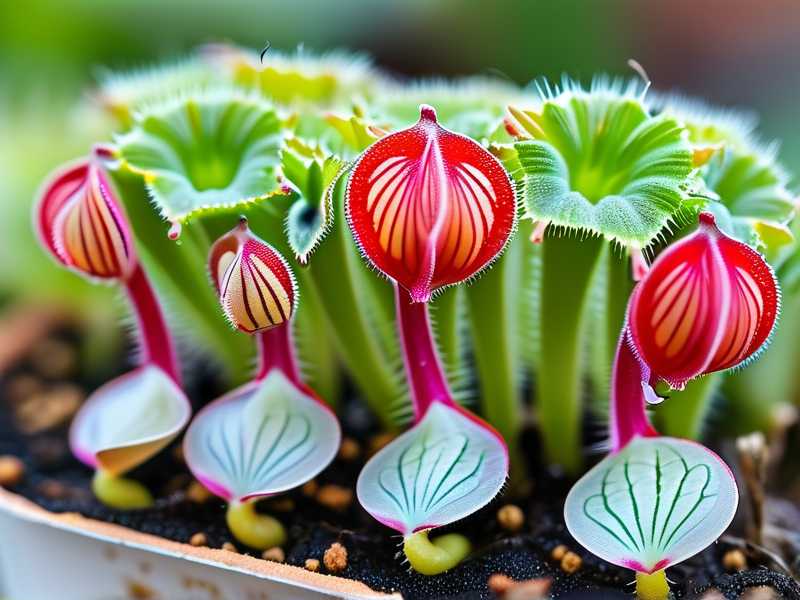
They're also fussy in ways that most houseplants aren't. Mineral-free water only. No rich potting soil. And seedlings? Seedlings are basically dessert for thrips.
I've killed my share of them. I lost an entire tray of Mexican butterwort seedlings two winters ago to a thrips infestation I didn't catch until week three. That one hurt.
What Thrips Actually Do to Pinguicula Seedlings
Thrips are tiny. Like, 1 to 2 mm tiny. You usually won't see the insect first. You'll see the damage.
On butterwort seedlings, it shows up as silvery streaks and stippling on the newest leaves. Sometimes the leaf edges curl. Sometimes you get those classic black specks, which are thrips droppings, not dirt.
Here's the annoying part. Pinguicula leaves are already sticky and glandular, so damage is hard to read at a glance. A leaf that looks dull might just be dry. Or it might be a feeding site.
The RHS{:target="_blank"} lists thrips among the most persistent glasshouse and indoor pests, and notes they hide in tight leaf joints and growing points where sprays barely reach. That matches what I've seen. They wedge themselves right down in the crown of the rosette.
Why Seedlings Get Hit Harder Than Adult Plants
Adult butterworts can shrug off a light thrips population. They're bigger, they grow faster, and they can outpace the damage.
Seedlings can't. Their leaves are soft, thin, and full of the juicy new growth thrips prefer. A single female can lay dozens of eggs inside that tissue, and the whole life cycle can wrap up in about two weeks indoors.
That's why "wait and see" almost never works with seedlings. By the time you're sure, you've lost a month of growth.
My 14-Day Routine for Thrips on Butterwort Seedlings
I've run this three times now on different batches. It works, as long as you start early and stay consistent.
Day 0 to 2: Isolate and Inspect
Move the affected tray at least three feet away from everything else. Yes, three feet. Thrips don't fly far on their own, but they hitch rides on air currents and your sleeves.
Get a 10x jeweler's loupe. I keep one in my supply drawer and it's the single most useful tool I own for this. Look at the crown of each seedling, the undersides of leaves, and the rims of the pots.
Tap a leaf over a white sheet of paper. If tiny cigar-shaped specks start walking around, you've got thrips.
Day 2 to 7: Traps and Daily Checks
Hang blue sticky traps a couple of inches above the canopy. Blue works better than yellow for thrips, in my experience. I've hung both side by side and the blue cards fill up first every time.
Check the traps every morning. Around day four, I saw the catch rate drop noticeably. Not zero, but clearly less.
Keep checking the seedlings every two days with the loupe. What you're looking for is whether new leaves are coming in clean.
Day 7 to 14: Soil Systemic and Humidity Balance
This is the part people skip, and it's why thrips keep coming back.
Sticky traps only catch the adults. The larvae and pupae are down in the soil and in the leaf joints. If you don't address that, you get a second wave about 12 to 14 days later. Ask me how I know.
I use a granular systemic labeled for ornamental container plants, scratched lightly into the surface and watered in. Follow the label rate exactly. More is not better, especially with carnivores.
By day nine, my newest leaves were clean. By day 14, I had visible new growth with no stippling. That batch is still alive today.
One caution. Don't spray soap, oil, or heavy horticultural sprays on Pinguicula leaves. I tried a dilute insecticidal soap years ago and it stripped the glands off half the rosette. Those leaves never recovered.
Light: The Part Most People Get Wrong
Here's the thing. Weak light doesn't cause thrips. But weak, leggy, soft growth is exactly what thrips prefer.
Pinguicula seedlings want bright light with a little protection from harsh midday sun. A few inches under a T5 or a decent LED bar works well for me. On a windowsill, east or filtered south is usually fine.
Too little light and you get pale, stretched seedlings that are basically thrips bait. Too much direct sun and you get scorched, crispy leaf edges, especially on young plants that haven't built up tolerance.
If you're moving seedlings to brighter light, do it over a week. Ten minutes more each day. I've cooked a whole tray by being impatient.
Watering Pinguicula Seedlings Without Drowning Them
I'll say the thing that needs saying. 90% of indoor plants die from overwatering, and butterwort seedlings are not an exception.
The rule I follow is simple. Water from the tray, not over the top. Use distilled, rain, or reverse osmosis water. Tap water leaves mineral deposits that slowly poison the plant.
Keep the tray shallow. I let the pot wick up what it needs for about 20 minutes, then pour off whatever's left. Seedlings stay evenly moist, never swampy.
In winter, cut way back. Mexican species slow down and temperate species go dormant. Let the surface dry slightly between waterings.
If the crown turns brown and mushy, that's rot, not underwatering. Repot into fresh dry mix and hold off on water for a few days.
Soil Mix, Pots, and Repotting
Butterworts don't want normal potting soil. They want lean and airy.
My mix is roughly two parts peat or coir, one part perlite, and a handful of coarse sand or pumice. Some growers add a little vermiculite. I skip it, since it holds more water than I want.
For pots, go small and shallow. A 2-inch seedling pot is plenty. Terracotta dries faster, plastic holds moisture longer. In a humid terrarium, I use plastic. On an open shelf, I lean terracotta.
Repot seedlings only when they're crowding each other or the roots are circling. Usually that's every 8 to 12 months. Spring is the safest window.
Fertilizing: Less Is Almost Always Right
Carnivorous plants get their nutrients from prey, not from you. Feeding seedlings a normal houseplant fertilizer is one of the fastest ways to burn them.
If you want to push growth, use a very diluted orchid or carnivorous plant fertilizer at maybe one-quarter strength. Once a month during active growth. That's it.
Skip fertilizer entirely in winter. Skip it if the plant is stressed, repotting, or fighting pests. Stressed plants plus fertilizer equals dead plants, in my experience.
Seasonal Care for Pinguicula Seedlings
This is where most people either succeed or lose the tray.
Spring
Growth restarts and this is your main window for repotting and dividing. Bump the light up gradually. Start weak fertilizer once you see fresh leaves.
Watch for thrips now, because spring is when they surge indoors. Fresh sticky traps go up in March for me, every year, without fail.
Summer
Heat is the enemy. Above about 85°F, Mexican butterworts stall out and go semi-dormant. Move them off hot windowsills and increase airflow.
Keep the tray watered but don't let pots sit in standing water in a hot room. That's how you get root rot and fungus gnat explosions.
Thrips love hot, still air. A small clip fan running on low makes a real difference.
Fall
Growth slows. Cut fertilizer back to once every six weeks, then stop altogether. Reduce water slightly.
Clean up dead leaves around the base. Thrips and their pupae hide in that debris, so removing it takes away their hiding spots.
This is also a good time to check whether you need to bring anything indoors before temperatures drop.
Winter
Temperate species want a cool, drier dormancy. Mexican species want to stay warm but much drier and with less light.
No fertilizer at all. Water sparingly. If you use tap water in summer by accident, winter is when the damage shows up, so stick with distilled.
Indoors, keep plants away from cold drafts and heating vents. Both stress the plant, and stressed plants attract pests.
Three Mistakes That Kill Pinguicula Seedlings
I've made all three. More than once.
Overwatering. The classic. Soggy crown, black rot, gone in a week. Water from the tray and let the surface breathe.
Wrong light. Too dim and you get leggy, pest-prone seedlings. Too strong and you get scorched leaves. Aim for bright but filtered.
Wrong pot. Oversized pots hold water the roots can't use. Small pots, shallow pots, always.
The AHS{:target="_blank"} has a solid general primer on container growing and drainage if you want to go deeper on pot sizing and media.
Questions I Get Asked a Lot
Can thrips live in the soil of my Pinguicula seedlings?
Yes. They pupate in the top layer of media and in leaf litter. That's why sticky traps alone don't finish the job. You need to treat the soil or replace it.
Will carnivorous plants eat the thrips for me?
Only the adults that wander onto the leaves. Larvae and pupae stay hidden, and a heavy infestation will outpace what a seedling can digest. Don't count on it as your main defense.
How often should I check new plants before putting them near my collection?
Two weeks minimum. I check on day one, day four, day eight, and day fourteen. If I see nothing, they move to the main shelf.
What I'd Tell You If We Were Standing in Your Grow Room
Thrips on Pinguicula seedlings are beatable. You just have to move faster than you think you need to.
Isolate early. Hang blue traps. Treat the soil, not just the leaves. Keep the light bright and the water clean. And check your plants with a loupe once a week, forever. That habit alone has saved more of my seedlings than any product I've bought.





