 bluename
 How to Treat Mold Spores on Pinguicula Leaf Traps: A Home Grower’s No-Nonsense Guide
If you see fuzzy white mold on the sticky leaf traps of your butterwort, here’s the short answer: isolate the plant, remove the visible mold, improve airflow, stop misting the leaves, and use a diluted hydrogen peroxide spray. That is the basic how to treat mold spores on Pinguicula leaf traps routine I use. I check the plant every morning for 14 days. On day 1, I clean. By day 7, most new mold stops. By day 14, I know if the plant is stable. Now let’s break down what actually works, what made my first attempts worse, and how to keep mold from coming back.
Pinguicula, also called butterworts, are carnivorous plants. Their leaves are covered in tiny sticky glands. Those glands catch fungus gnats, fruit flies, and other small insects. That same sticky surface is a perfect landing pad for mold spores if the air stays still and the leaves stay wet. I learned this the hard way.
I killed my third butterwort before I understood that high humidity is not the same as soggy leaves. I had it in a closed glass jar. I misted it every morning. It looked like a tiny jungle. Then one day, the leaf traps were covered in fuzzy white mold. It smelled like a wet basement. That plant did not make it. The next two did, because I changed my routine.
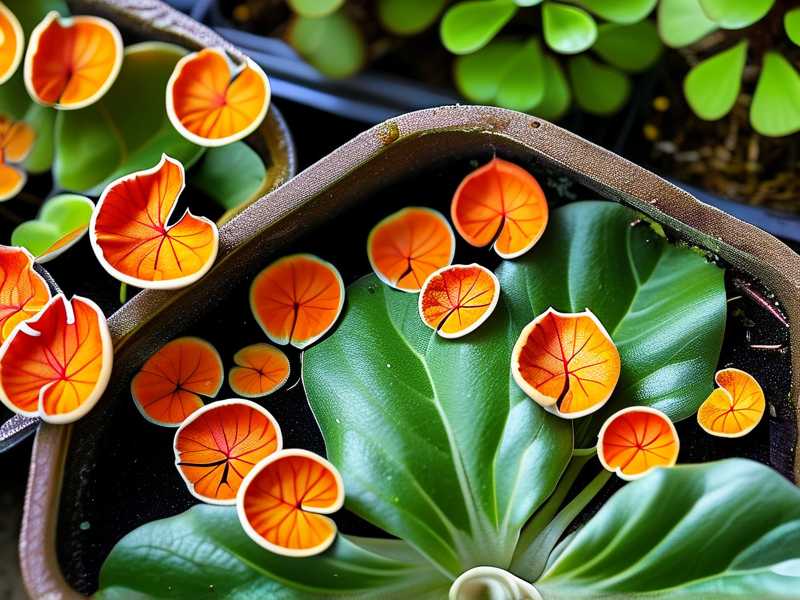
Why Mold Spores Love Pinguicula Leaf Traps
Mold spores are everywhere. They float in the air. They land on soil, pots, windowsills, and leaves. They do not need a sick plant to start growing. They need moisture, still air, and something to feed on.
Pinguicula leaf traps give mold all three. The sticky glands hold moisture. Dead insects stuck to the leaves break down. If the plant sits in low light or a closed terrarium, the air around the leaves never moves. That is mold heaven.
I also noticed that my mold problems got worse when I used tap water. Tap water leaves minerals on the leaves. Those minerals can feed algae and mold. So I switched to distilled water or rainwater. That one change helped a lot.
Another thing: mold on butterwort leaves is often a symptom, not the root problem. The root problem is usually too much water, too little light, or bad airflow. Treat the mold, yes. But if you do not fix the environment, it comes back.
The Two-Week Mold Treatment Routine I Use
I am not a fan of complicated routines. I like steps I can do before coffee. This is the exact Pinguicula leaf mold treatment plan I followed on my Pinguicula moranensis and a hybrid called ‘Weser.’
Day 1: Isolate and Clean
Move the plant away from your other plants. Mold spores spread. I use a clean cotton swab dipped in distilled water to gently roll the fuzzy mold off the leaf. Do not scrub. You will damage the sticky glands. If the mold is on a dead insect, remove the insect with tweezers. If a leaf is brown and mushy, cut it off with clean scissors.
I also wipe the outside of the pot. Mold spores sit on plastic and ceramic too.
Days 2–4: Targeted Spray
I mix 1 part 3% hydrogen peroxide with 4 parts distilled water. That is about 1 teaspoon of peroxide to 4 teaspoons of water for a small batch. I put it in a small spray bottle. I spray the affected leaves once in the morning. I keep the plant out of direct sun until the leaves dry.
I test one leaf first if the plant is small or rare. Some butterworts are more sensitive than others. If the leaf turns dark or looks burned, stop. I learned that lesson with a different plant. I sprayed a full-strength peroxide mix and fried the leaf edges.
By day 3, the white fuzz usually stops spreading. It may not disappear completely. That is fine. The goal is to stop new growth.
Days 5–7: Fix Air, Light, and Water
This is the part most people skip. I move the plant to a spot with gentle airflow. A small clip fan on low, pointed near but not directly at the plant, works. I stop misting. I stop top watering. I switch to tray watering only when the top of the soil feels barely moist.
I also increase light. Not full sun. Bright, indirect light. For me, an east-facing window with a sheer curtain works best. The RHS puts airflow and watering at the top of the list for indoor fungal problems. I agree with that from my own messy experience.
By day 7, I want to see dry leaf surfaces and new growth that does not look fuzzy. If the mold is still active, I repeat the peroxide spray every other day for another week. I do not use a strong fungicide unless I have no other choice. Butterworts hate heavy chemicals.
Days 8–14: Watch New Growth
I check every morning. I look at the center of the rosette, under the leaves, and near the soil line. If the new leaves are clean and sticky, the plant is winning. If the old leaves still have mold but new leaves are clean, I leave them alone. Old leaves will fade eventually.
On day 14, I make a call. If there is no new mold, I return the plant to its normal spot. If there is still fuzz, I keep it isolated and consider a sulfur-based fungicide made for sensitive plants. I have only had to do that once. That plant survived, but it lost two leaves.
By the end of week two, my healthy plants looked a little rough. That is normal. The important thing is that the mold stopped. New sticky leaves came back in about three weeks.
Three Beginner Mistakes That Cause Most Pinguicula Mold Problems
I have made all three. I have also watched friends make them. Here is the plain truth.
Mistake 1: Overwatering
Here’s the blunt truth: 90% of indoor plants die from overwatering, and butterworts are not immune. I used to think carnivorous plants wanted to sit in water all the time. That is true for some plants. It is not true for most Pinguicula, especially Mexican species.
I water from the tray. I let the pot soak for 20 minutes. Then I pour out any water left in the tray. I never leave the pot standing in water day after day. In winter, I let the soil dry almost completely before watering again.
If the soil smells sour, you are overwatering. If the leaves are yellow and soft, you are overwatering. If mold keeps coming back, you are probably overwatering.
Mistake 2: Light in the Wrong Place
Low light makes weak leaves. Weak leaves have less sticky mucus. Less mucus means the leaf traps do not catch insects well. And mold spores settle more easily on tired leaves.
I tried keeping a butterwort on a north-facing shelf because I read they like shade. It survived, but it looked sad. Then mold showed up. I moved it to an east window with a sheer curtain. The difference was obvious in 10 days. The leaves got thicker and shinier.
Too much direct sun is also bad. It can burn the leaves and dry out the sticky glands. Think bright shade, not beach vacation.
Mistake 3: Wrong Pot
I once planted a Pinguicula in a cute glass bowl with no drainage. It looked great for two weeks. Then the soil turned green and white. Mold everywhere. I had to repot the plant and throw away the bowl.
Use a small pot with drainage holes. Shallow pots work well because Pinguicula roots are short. Plastic is fine. Terracotta can dry out too fast, but it can work if you watch it. Avoid oversized pots. A big pot holds too much wet soil around tiny roots.
Light for Pinguicula: Bright, but Not Blasting
Most indoor butterworts want bright, indirect light. A few hours of gentle morning sun is fine. Hot afternoon sun through a window can cook the leaves.
I use a simple rule. If the leaf surface feels warm after 30 minutes in the sun, it is too strong. Move the plant back. If the leaves are pale, flat, and not sticky, the light is too weak.
In winter, I add a small LED grow light. I keep it 6 to 8 inches above the plant. I run it for 10 to 12 hours. That keeps the rosette tight and the leaves sticky. It also helps prevent mold because the leaf surface dries faster.
Watering Pinguicula Without Growing Mold
Water is the number one thing to get right. Use distilled water, rainwater, or reverse osmosis water. Tap water has minerals that build up in the soil and on the leaves. Those minerals can encourage mold and algae.
I use the tray method. I fill the tray with a half inch of water. I let the pot drink for 20 to 30 minutes. Then I empty the tray. I water again when the top inch of soil feels dry. In summer, that might be every three or four days. In winter, every two to three weeks.
Do not mist the leaves. I know it feels nice. I did it for years. But misting keeps the leaf traps wet. Wet leaf traps plus still air equals mold. If you want higher humidity, use a small humidifier nearby. Do not spray the plant.
If water gets on the leaves by accident, gently blot it with a clean tissue. Do not rub.
Soil and Repotting for Healthy Leaf Traps
Pinguicula likes a light, airy mix. My go-to mix is two parts peat moss, one part perlite, and one part vermiculite. Some growers use one part peat and one part perlite with a little sand. That works too. Just do not use regular potting soil. It has fertilizer, and fertilizer can burn the roots.
I repot every 12 to 18 months in early spring. I use a pot that is only slightly wider than the rosette. I make sure the crown, where the leaves meet the roots, sits above the soil line. If you bury it, the plant rots.
After repotting, I keep the plant in bright shade for a week. I do not water heavily. I keep the soil barely moist. Then I go back to the normal tray routine. AHS also notes that light and water are the two biggest levers for healthy houseplants. That matches what I see with butterworts.
Fertilizing Pinguicula: Less Is Usually More
Butterworts are light feeders. I feed mine with a very diluted orchid fertilizer once a month during active growth. I use one-quarter of the recommended strength. I spray it on the leaves, not the soil. Then I let the leaves dry in gentle air.
I stop feeding in winter. I stop feeding if the plant is sick, moldy, or just repotted. I also do not feed if the plant is in summer dormancy. Some Mexican Pinguicula go semi-dormant in hot weather. Their leaves get small and dry. Feeding them then is a waste and can cause root burn.
The safest “fertilizer” is actually insects. A few fungus gnats or fruit flies are enough. Do not add dead bugs on purpose. If you have a fungus gnat problem, your butterwort will catch them for you.
Seasonal Care: What I Do in Spring, Summer, Fall, and Winter
Spring
Spring is wake-up time. I increase light slowly. I start watering more often. I remove dead leaves from the base. I repot if needed. I take leaf cuttings if I want more plants. I feed once a month with diluted fertilizer.
I also cut off flower stalks if the plant looks weak. Flowers are pretty, but they take energy. If the plant is strong, I let one or two blooms stay.
Summer
Summer is tricky. Heat can stress butterworts. I keep them out of hot afternoon sun. I make sure air moves around the leaves. I watch for red spider mites, which love dry, hot air. If the plant goes semi-dormant, I reduce water and stop fertilizer. I do not panic. The plant will come back in fall.
I also keep an eye on mold in summer. Air conditioning can make the room dry, but closed windows can make the air still. I open a window or use a small fan.
Fall
Fall is transition time. I reduce fertilizer. I let the soil dry a little more between waterings. I clean up dead leaves so mold has less to eat. I check for pests before bringing plants inside. If the plant is a temperate species, it may need a cool rest. I keep it in a cool room, around 50°F to 60°F, and water less.
Winter
Winter is survival mode for many butterworts. I keep them away from cold windows. I stop fertilizing. I water very little. I only water when the leaves start to look limp. I keep the room cool but not freezing. For Mexican Pinguicula, I aim for 55°F to 65°F. For temperate types, they may want it even cooler.
I do not mist in winter. I do not repot in winter unless there is an emergency. I check for mold once a week. If I see it, I treat it right away.

Pests, Diseases, and Troubleshooting
Mold is the main issue in this article, but it is not the only one. Here is what I look for.
Fuzzy white mold on leaves: Treat with the two-week routine above. Improve airflow. Stop misting. Remove dead insects.
Yellow leaves: Old leaves turn yellow and die. That is normal. If many leaves turn yellow at once, suspect overwatering or root rot. Check the soil smell. Repot if needed.
Brown, mushy leaves: This is rot. Cut the affected leaves. Let the soil dry. If the crown is mushy, the plant may not survive. Take leaf cuttings if you can.
Crispy brown leaf tips: This is usually low humidity or too much sun. Move the plant back from the window. Check that you are not using tap water.
Aphids: Small green or black insects on new growth. I wash them off with a gentle stream of water. Then I spray with diluted soapy water. I rinse after an hour.
Mealybugs: White cottony blobs. I remove them with a cotton swab dipped in rubbing alcohol. I check under the leaves every few days.
Red spider mites: Tiny specks and fine webbing. They hate humidity. I raise humidity around the plant with a humidifier, not by misting the leaves. I also spray with diluted insecticidal soap if needed.
Fungus gnats: They are annoying, but butterworts eat them. If they get out of hand, let the soil dry a bit more. Use a sticky trap.
Three FAQ
Can mold spores on Pinguicula leaf traps hurt me? Usually no. The mold that grows on leaves is not the same as toxic black mold in walls. But it can bother people with allergies. Wear gloves if you are sensitive. Wash your hands after handling the plant.
Should I cut off every leaf that has mold? No. If the leaf is still firm and mostly green, clean it and keep it. If the leaf is brown, mushy, or smells bad, cut it off. The plant needs leaves to make energy. Do not strip it bare unless you have to.
How do I keep mold from coming back after treatment? Fix the three big things: airflow, light, and watering. Stop misting. Use tray watering. Remove dead insects. Keep the plant in bright, indirect light. Check it once a week. If you see fuzz early, treat it early. That is the whole game.
The big takeaway is simple. Mold on butterwort leaves is not a death sentence if you catch it early. Isolate the plant. Clean the leaves. Spray with diluted hydrogen peroxide. Fix the air, light, and water. Give it two weeks. My own plants bounced back once I stopped babying them with mist and started giving them moving air. You can do the same.





